
Takallam vs Freshdesk
Freshdesk is a good helpdesk. It is quick to stand up, it covers a lot of channels, and a small team can run it without hiring a consultant. Takallam is a different shape of product: voice-native, built for Gulf Arabic, and sold per interaction instead of per seat. Here is where each one is the better answer.
One is built around tickets. One is built around talking.
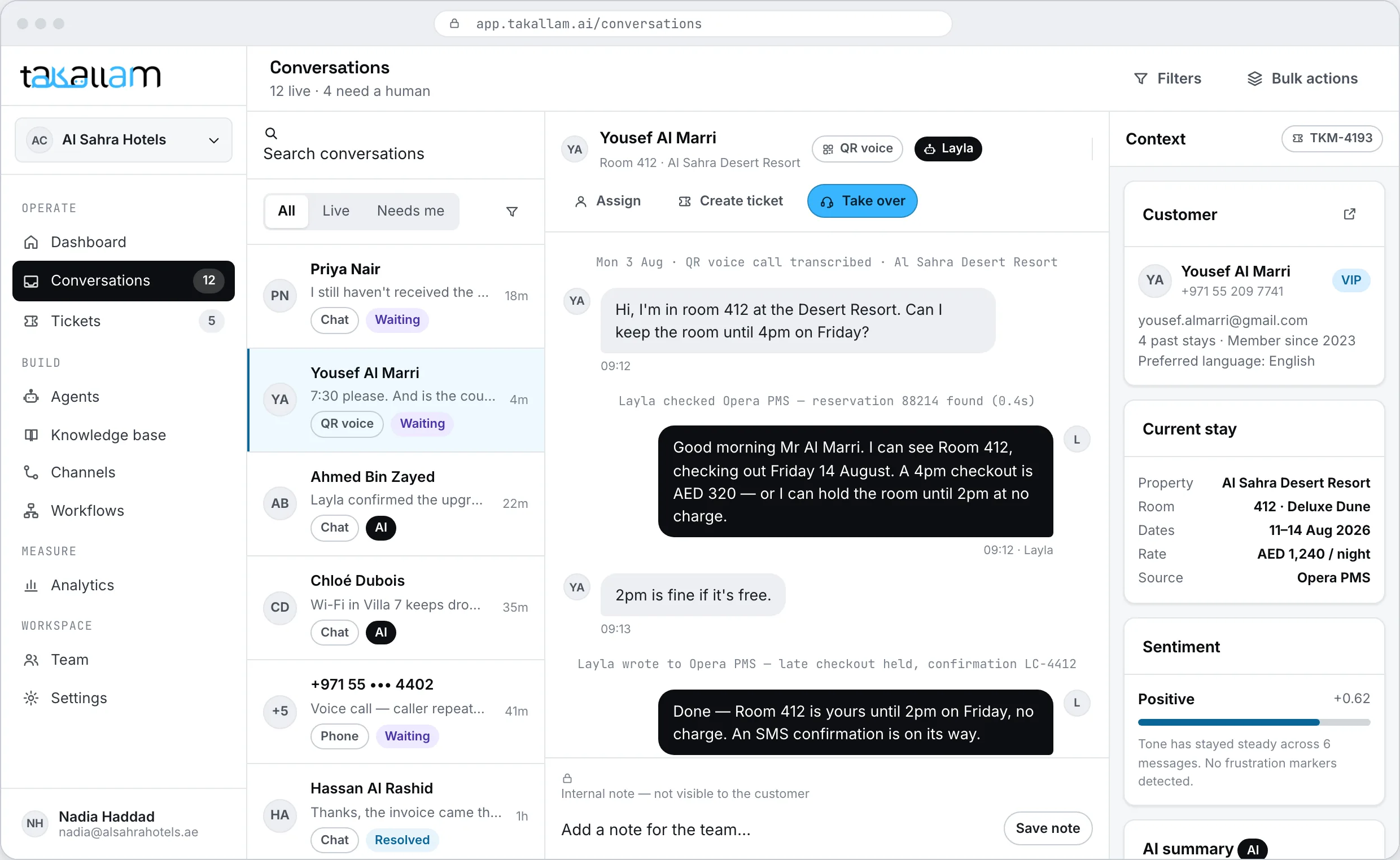
Freshdesk starts with a ticket. Something arrives, it gets a number, it gets assigned, it gets closed. That model is decades old because it genuinely works for written support. Takallam starts with a conversation someone is having right now — often out loud, often in Arabic, often while standing in front of the thing they are asking about. Tickets exist in Takallam too, but they are what a conversation becomes when it turns into work, not the unit everything is measured in.
- Freshdesk adds AI and voice to a ticketing product. Takallam was built voice-first with ticketing inside it.
- Seats are the meter in a helpdesk. In Takallam the meter is interactions, priced separately for each channel.
- A printed code a customer scans and speaks to has no helpdesk equivalent, because helpdesks were not designed for someone standing in a corridor.
What Freshdesk gets right
Freshdesk earned its position, and pretending otherwise would not help you choose. Three things it does well:
It really is quick to start
You can be answering tickets the same afternoon. No implementation phase, no data model to design, no partner to hire. For a team that needs a support desk this week, that matters more than any feature list.
Solid omnichannel ticketing
Email, web forms, chat, social and messaging arrive in one queue with automations, SLAs and reporting around them. If your support work is written and ticket-shaped, Freshdesk does that job properly.
Approachable for the people using it
Agents work it out without training and admins change things without a certification. It is also one of the easier helpdesks for a growing team to commit to, which is a real advantage when budgets are tight.
Capability by capability
Capabilities only — no prices, and nothing that depends on which plan you are on. Both products move quickly, so treat this as a starting point rather than a final answer.
| Takallam | Freshdesk | |
|---|---|---|
| Voice-first answers from a printed QR code | ||
| AI answers inbound phone calls | Separate product | |
| Web and in-app chat | ||
| Email tickets, queues and SLAs | ||
| AI answers the support inbox in-thread | ||
| WhatsApp, Facebook and Instagram | ||
| Knowledge base built from your website automatically | ||
| Human takeover inside the same conversation | ||
| One agent shared across voice, chat, email and phone | ||
| Emirati and Gulf dialect voice | Not a focus | |
| Visual workflow builder with run history | ||
| Marketplace of third-party apps | API and webhooks | |
| Priced per interaction, per channel | Per agent seat | |
| Data resident in the UAE by default | Other regions |
Capability-level comparison written in 2026 from publicly documented behaviour, not from any plan sheet. Freshdesk changes often and its own documentation is the authority on Freshdesk — check it before you decide. Two rows above favour Freshdesk, and they are there on purpose.
A code on the door that answers out loud
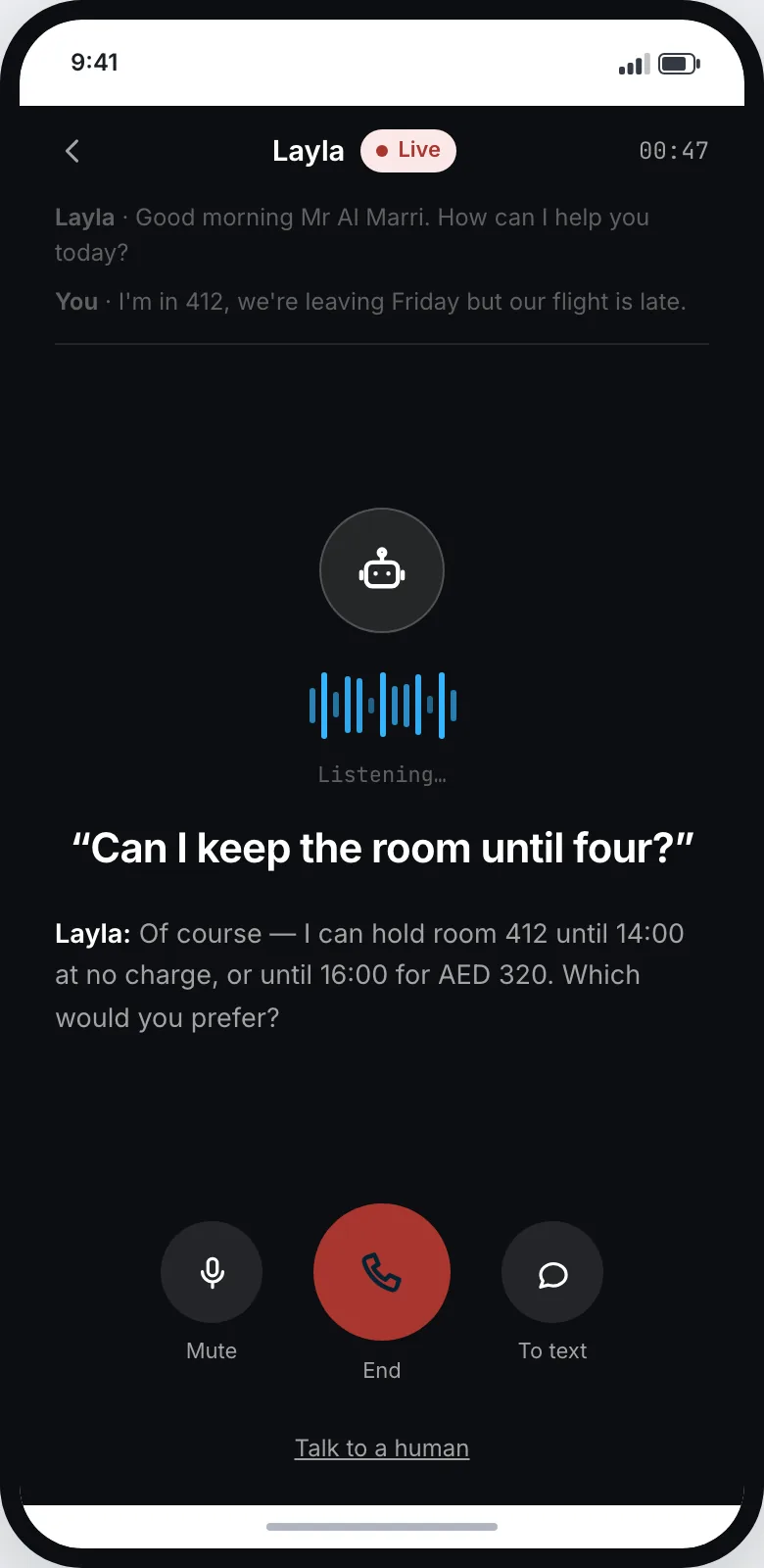
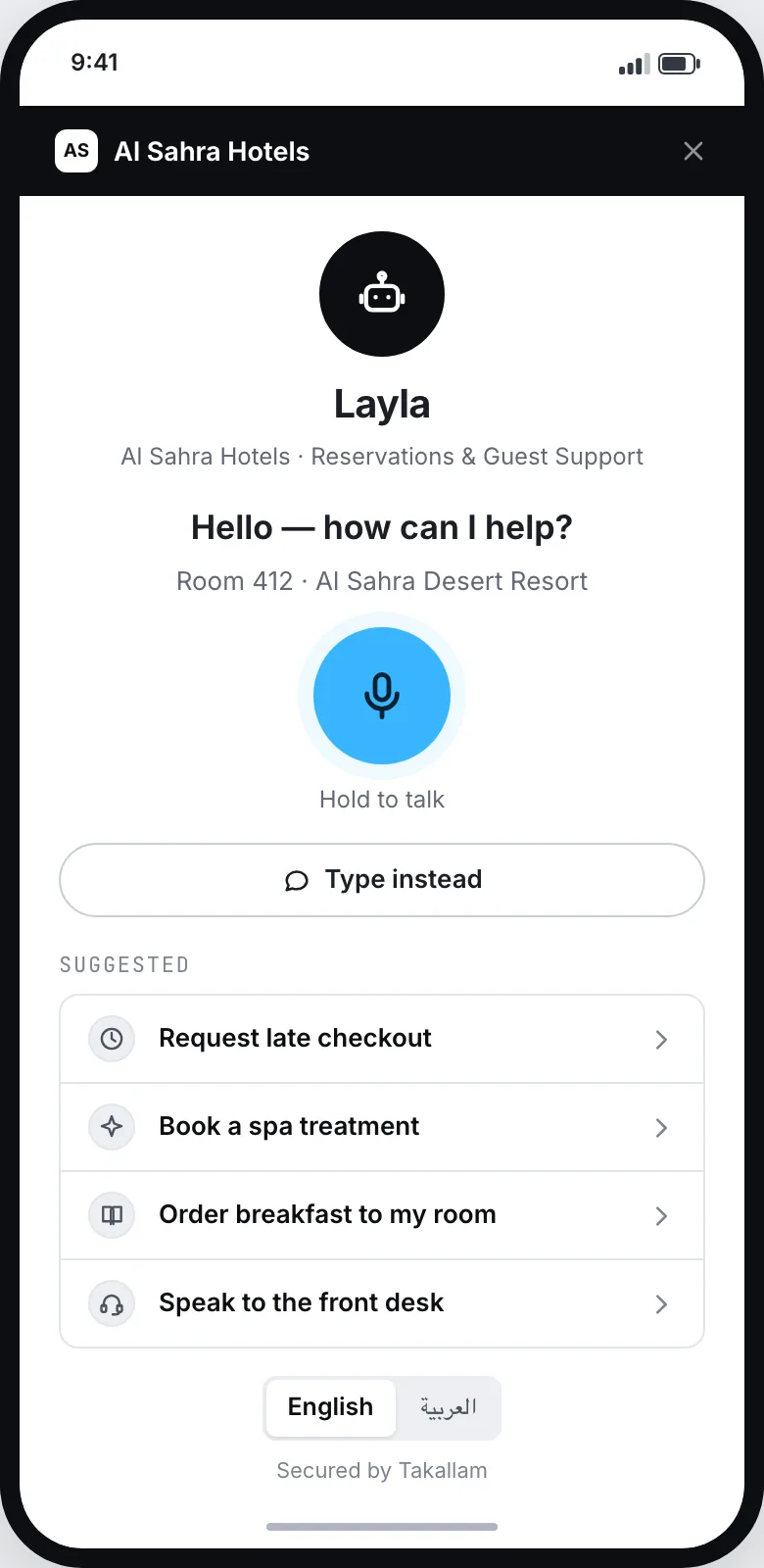
This is the part with no helpdesk equivalent. You print a QR code and put it where the question actually happens — a hotel room door, a shelf edge, a service counter, the side of a delivery box. The customer scans it and starts talking. No app, no download, no number to dial, no queue. Halfway through they can switch to text and keep the same thread.
- Opens straight into voice. The customer just speaks, in Arabic or English.
- Different codes for different places, so you can see which location produces which questions.
- Everything a scan produces lands in the same inbox as chat, email and phone, on the same customer record.
Emirati on the phone, not Arabic in a dropdown
Most support platforms treat Arabic as a localisation setting. The interface flips right-to-left, the canned replies get translated, and the AI answers in careful Modern Standard Arabic that nobody in Dubai actually speaks out loud. Takallam handles Emirati and wider Gulf dialect in voice and in text, including the caller who starts a sentence in Arabic and finishes it in English.
- Dialect in voice, not only Modern Standard Arabic in text.
- Code-switching handled inside the same turn, the way people really talk.
- Right-to-left across the whole customer experience, not a translated skin over an English product.
- Conversations, transcripts and knowledge stay in the UAE region by default.
Which one you should actually pick
Choose Freshdesk if…
Your support is mostly written and ticket-shaped. You need WhatsApp, Facebook and Instagram in the same queue today. You depend on a marketplace app that only exists there. Or you want a proven helpdesk your team can be running this week without changing how anyone works.
Choose Takallam if…
The phone matters and nobody wants to staff it at 3am. Your customers speak Gulf Arabic and expect to be answered in it. You want one agent handling a scan, a chat, an email and a call from the same knowledge. Or you would rather pay for conversations than for seats.
What people ask when they are comparing the two
Is Takallam a replacement for Freshdesk?
For most teams whose support is conversational, yes. Takallam includes the shared inbox, tickets, SLAs, knowledge base, analytics and workflow automation, so it is a whole support operation rather than an AI add-on, and email is one of its four channels rather than something you keep elsewhere. If your volume is mostly social messaging and you lean on marketplace apps, Freshdesk may still be the better home for that side of your support.
Can we keep Freshdesk and put Takallam in front of it?
Yes, and it is a sensible way to start. Takallam answers the front line — QR voice, chat, email and phone — and anything that needs a person or a record flows into your existing helpdesk through the API and webhooks. You get a voice channel without running a migration project first.
Does Freshdesk do phone support?
It does, through a separate contact-centre product in the Freshworks family, and plenty of teams run it happily. The difference is architectural rather than a question of quality: in Takallam the phone is one of four native channels sitting on the same agent, the same knowledge base and the same inbox, so it is not a second product to buy, configure and reconcile.
What is the QR voice channel, and is there anything like it in Freshdesk?
It is a printed code a customer scans and then speaks to — no app, no download, no phone number. It opens in voice and can drop to text mid-conversation. There is no equivalent in Freshdesk, or in any other helpdesk we are aware of, because helpdesks were designed for people at a keyboard rather than someone standing in a hotel corridor at midnight.
Which one is better for Arabic?
For written Arabic support, both will serve you, and Freshdesk has supported Arabic interfaces for a long time. For spoken Arabic in Emirati or Gulf dialect, Takallam — that is the reason it exists rather than being a translation layer on an English-first product. If your customers only ever type in English, this difference will not matter to you.
How do the two pricing models compare?
They are not measured in the same unit, so a like-for-like number would be misleading. Freshdesk is licensed per agent seat. Takallam is paid per interaction, priced separately for each channel, with no seats and no minimum commitment. Takallam is pre-launch and rates are being set with the first cohort, so we will quote against your real volume rather than publish a table.
How long does it take to move over?
The setup itself is four questions and a website crawl — Takallam reads your site, builds a knowledge base and drafts your first agents. The real work is reviewing what it learned and deciding what each agent is allowed to do. Most of the effort in a switch is exporting your history and rebuilding automations, not standing the new thing up.
Where does our data live?
In the UAE region by default. Conversations, transcripts and knowledge bases stay in-region, and you set what is retained and for how long.
Compare it against your own support, not a table
Tell us which channels you actually need and roughly what volume you handle. We will come back with a rate against your real numbers and show you the console with your own content inside it.
Pay per interaction · priced per channel · no seats, no minimums