
A printed code your customer can talk to
Put a code where the question actually happens — the back of a hotel room door, the edge of a shelf, the lid of a delivery box. The customer points a camera at it, speaks, and gets an answer. No app to download, no number to dial, nobody to wait for.
Camera, scan, question, answer
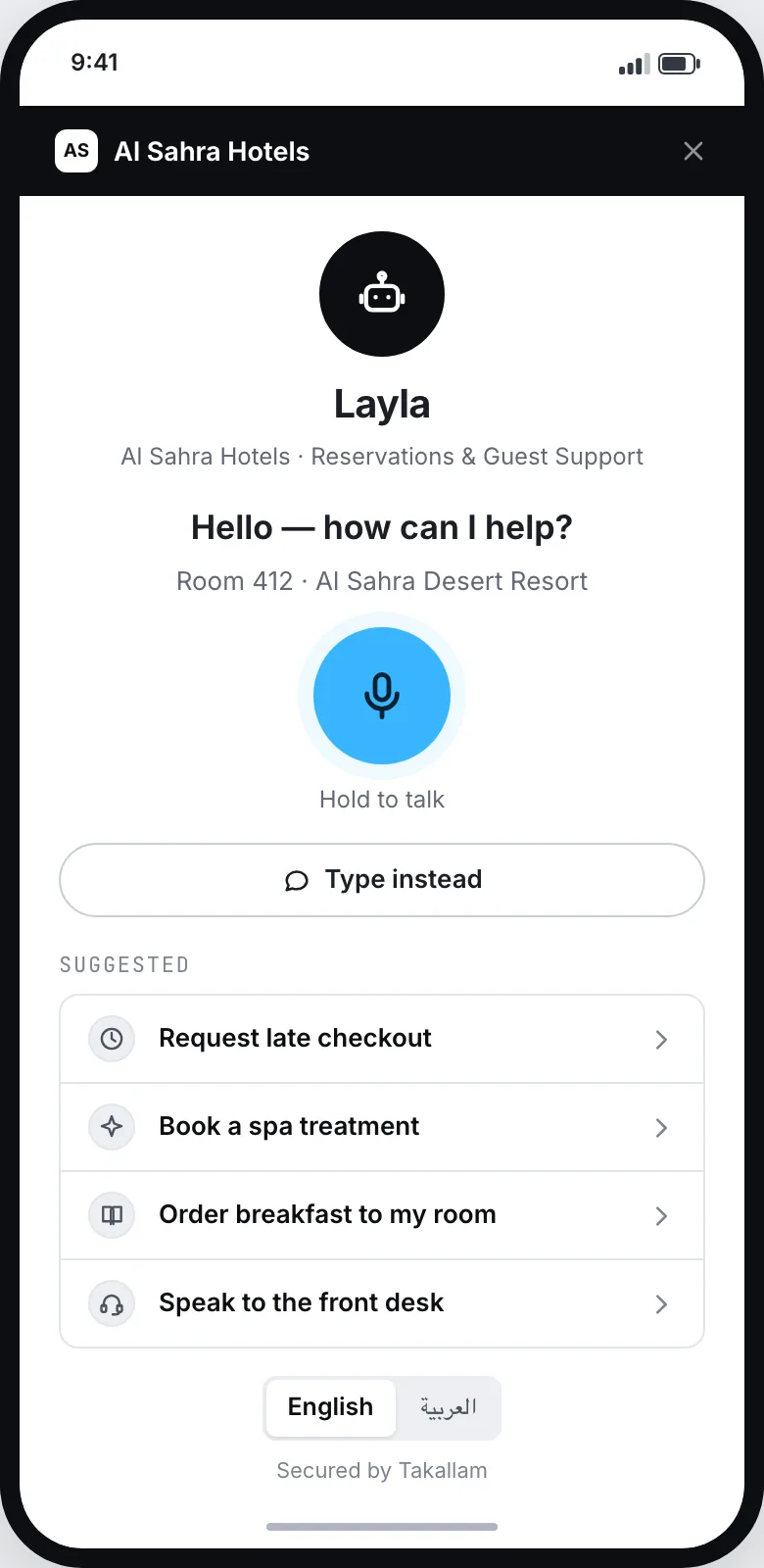
A QR code opens a page in the phone's own browser — the same way a restaurant menu does. Except this page is listening. It greets the customer in Arabic or English, they ask their question out loud, and the agent answers out loud.
- Nothing to install. It runs in the browser the phone already has.
- Each code carries its own context, so the code on room 1204 already knows which room it is.
- The first thing the customer hears is your agent, not a menu of options.
- Any phone with a camera and a data connection works.
Print it where the question gets asked
The value of a code is its position. It answers the question that comes up in that exact spot, and it tells you how often that spot produces a question at all.
On the room door card
A guest asks for a late checkout at 6am, or where breakfast is, or how the thermostat works — without picking up the phone to reception.
Takallam for hospitalityOn the shelf edge
A shopper asks whether their size is in the back, what the return window is, or which of two products fits their car.
Takallam for retailAt the service counter
The queue stays for the things that need a person. Everything else gets answered by the code on the stand while people are still standing in line.
On the delivery box
A customer opens the box and something is wrong. The code on the lid takes the problem there and then, instead of a form buried on your website.
In the clinic waiting room
A patient asks what documents to bring, which insurers are accepted, and what happens after the appointment — in Arabic, without asking the desk twice.
Takallam for healthcareOn the property listing board
Someone walks past a listing at 10pm, scans, and asks about the service charge and the handover date. The conversation is waiting for you in the morning.
Takallam for real estateIt opens listening, and it will read instead
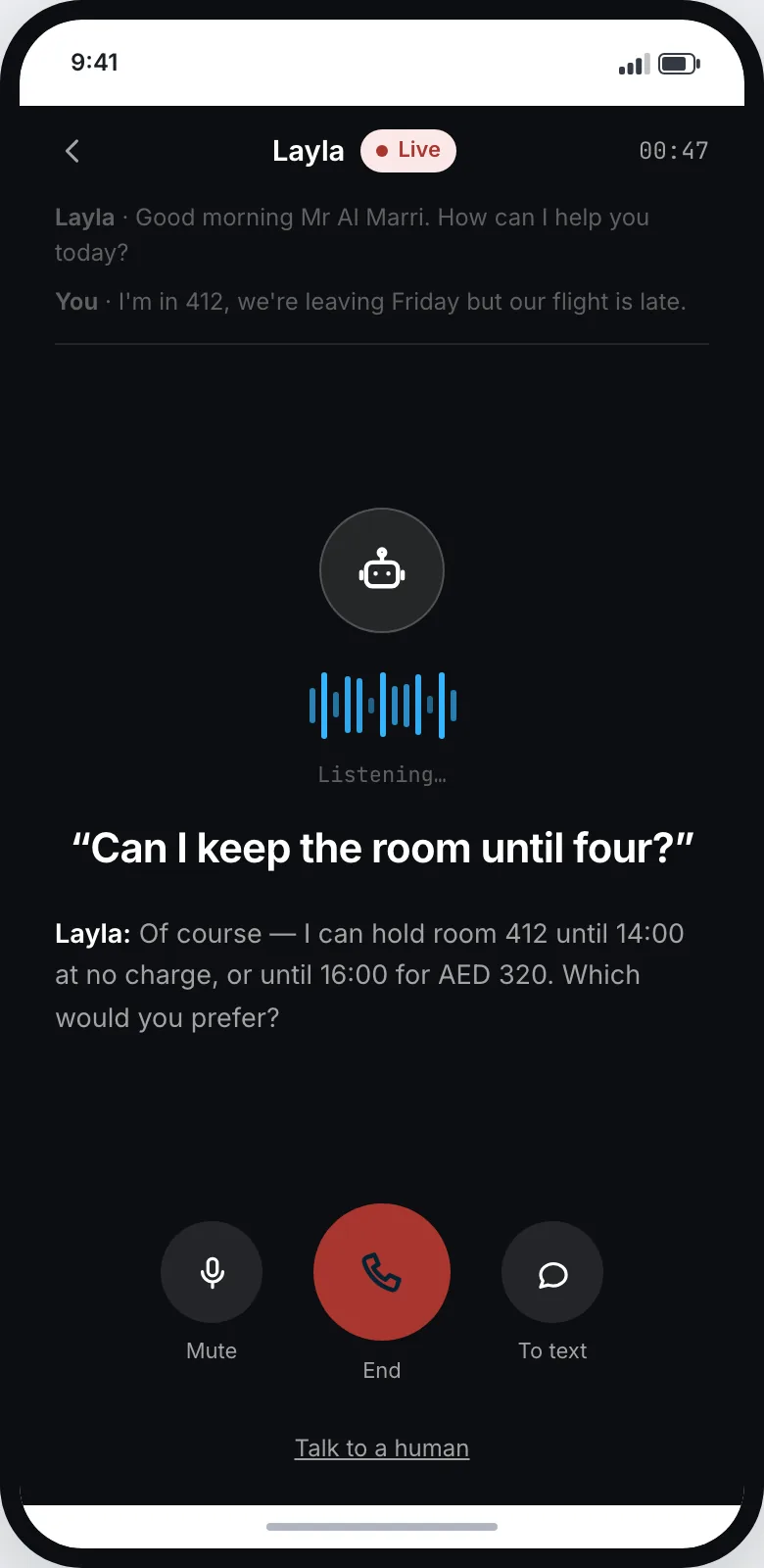
Most support surfaces make the customer type. But the person scanning a code is standing up, holding a bag, looking at a wall. Typing is the wrong thing to ask of them. So the conversation opens in voice, and switches to text the moment they want it to.
- Tap once and talk. The agent replies out loud.
- Switch to text mid-conversation without losing the thread or repeating the question.
- Emirati and Gulf dialect in both directions, including a customer who starts in Arabic and finishes in English.
- A quiet lobby and a loud warehouse are different problems. The customer picks the mode.
One code per place, and a report for each one
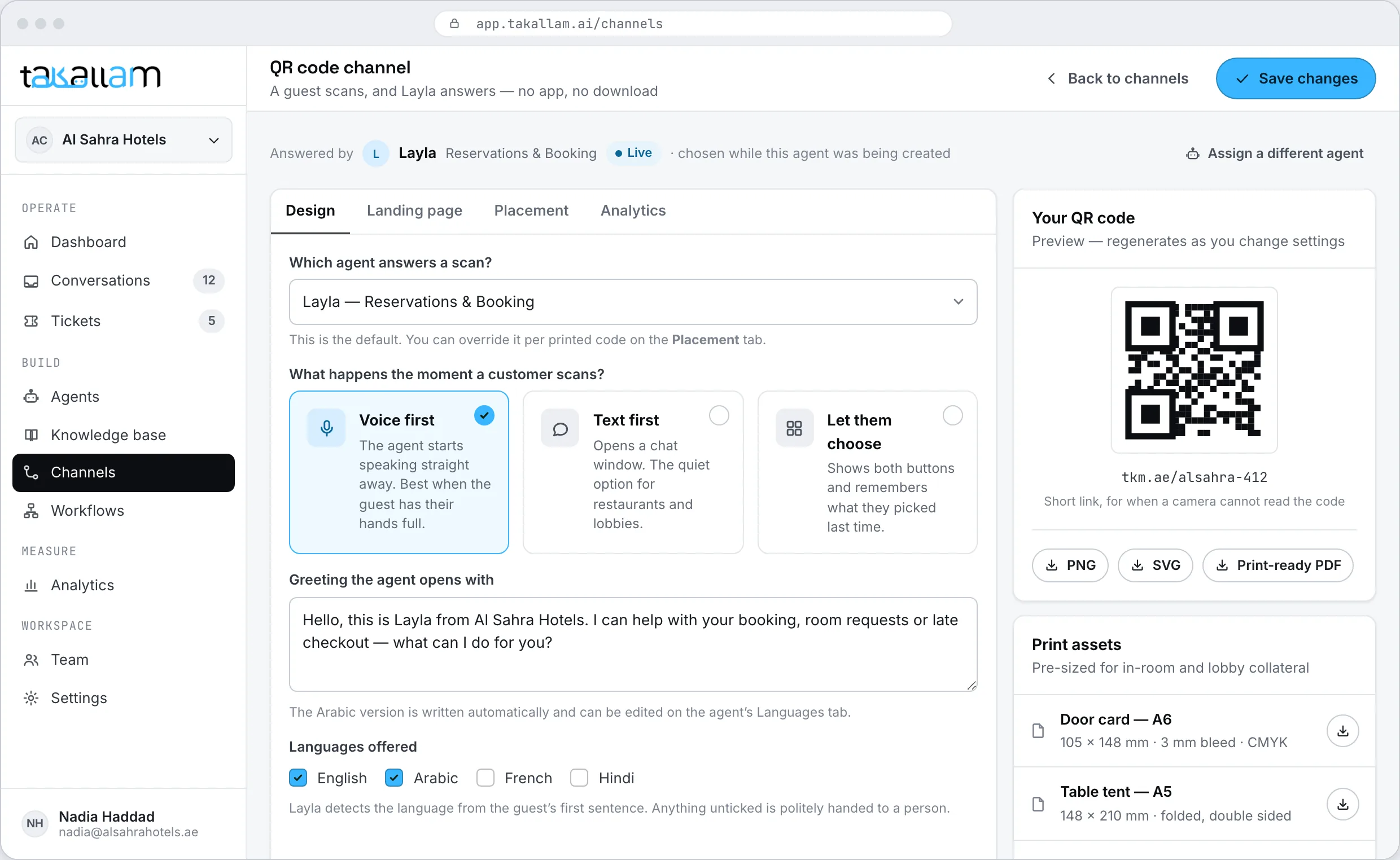
You create a code in the console, name it after where it is going, and download it to print. Every scan is attributed to that code, so the sticker on the third floor and the sticker in the car park are two different lines in your analytics.
- Generate as many codes as you have places to put them.
- Download and print at whatever size the surface needs.
- See scans, conversations and the questions each placement produces.
- Retire one code without reprinting the rest.
The code is a door, not a second product
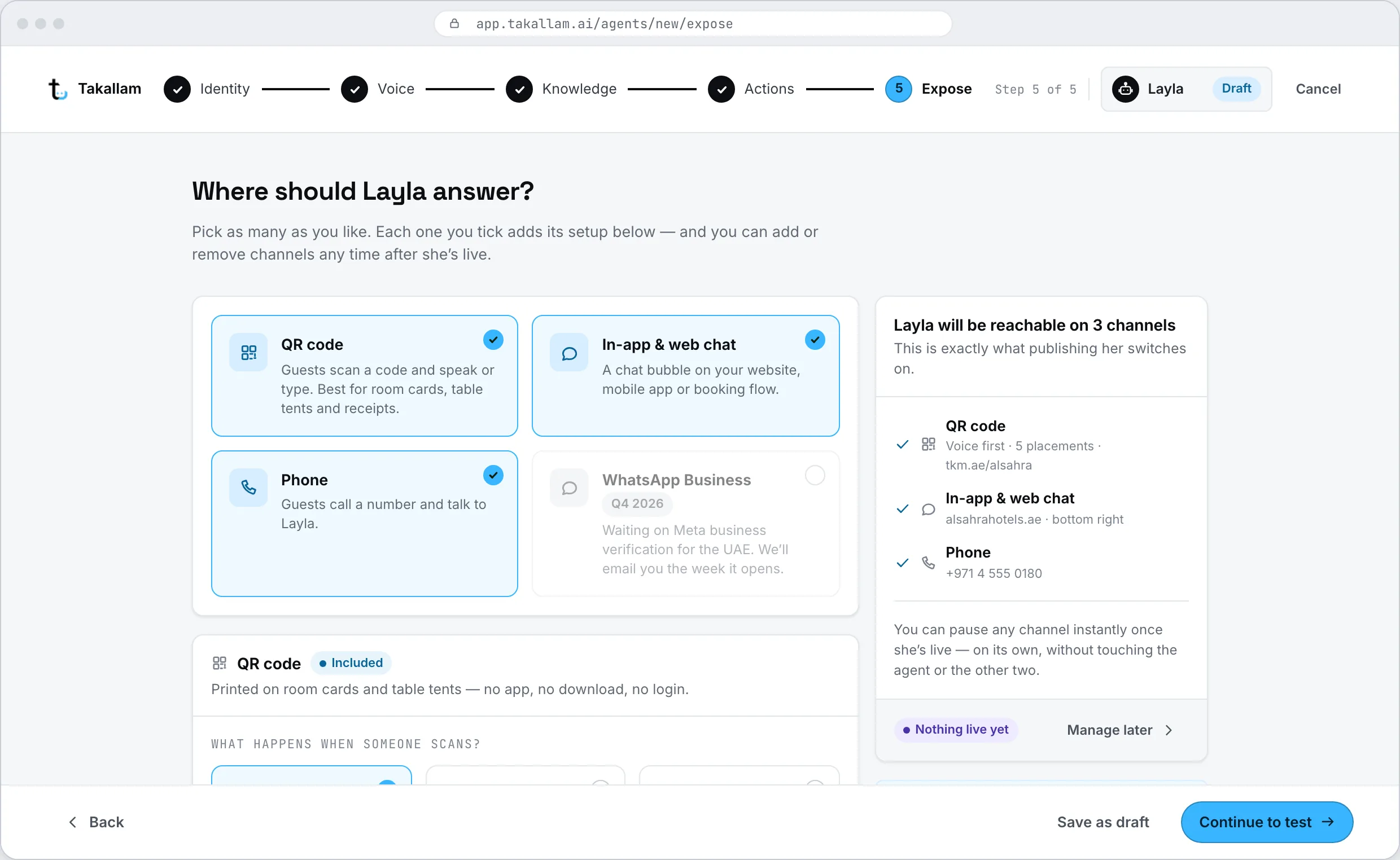
The agent behind the QR code is the same agent that answers your chat widget, your support inbox and your phone line. Same knowledge base, same rules about what it is allowed to do, same record of the customer. You tick a box to expose it on QR. You do not build a second bot.
- One knowledge base behind every channel, so the answer cannot drift between them.
- A customer who scanned yesterday and calls today is one history, not two strangers.
- Escalation rules are set per agent and per channel.
- Test the agent against real questions before a single code is printed.
What the code actually replaces
A printed FAQ card is cheap, never goes offline and needs no signal. A good front-desk team reads a guest better than any software will. Neither of them answers the question that is not on the card, at 2am, in Arabic, without a queue.
| Takallam QR voice | Printed FAQ card | Front-desk queue | |
|---|---|---|---|
| Answers a question that is not printed on it | |||
| Available at 2am | |||
| Answers in Emirati Arabic and English | Whatever was printed | Depends who is on shift | |
| Takes a follow-up question | |||
| No queue to stand in | |||
| Changing an answer | Edit the knowledge base | Reprint everything | Brief every shift |
| Tells you what people asked about | Only if someone logs it | ||
| Reporting per placement | |||
| Hands over with the full transcript | |||
| Adding a new location | Print another code | Reprint and redistribute | Roster more people |
A comparison of how the same job gets done, not of products. Most places keep all three — the code takes the volume, the card stays on the wall, and the desk is free for what genuinely needs a person.
Same agent, three more places to reach it
A code covers the moment someone is standing in front of something. The other three channels cover everywhere else.
In-app & web chat
One script tag on your site, or an SDK inside your app. It picks up the conversation that started at a QR code an hour ago.
See the chat channelForward your support address, or connect the mailbox. The agent reads the whole thread, replies from your own address, and triages the rest.
See the email channelPhone
A real inbound number — new, or the one already on your signage. It answers on the first ring, however many people call at once.
See the phone channelWhat people ask about the QR channel
What happens when a customer scans the code?
The code opens a page in their phone browser and the agent starts listening. They ask their question out loud, in Arabic or English, and get an answer out loud. There is no app, no login and no form to fill in first.
Does the customer need to download anything?
No. It runs in the browser already on the phone, the same way a QR restaurant menu does. Any phone with a camera and a data connection works.
What if they would rather type than talk?
They switch to text inside the same conversation. The thread carries over — the customer does not repeat the question and the agent does not start again.
Can I use different codes in different places?
Yes, and you should. Each code is created and named separately, so the sticker on the room door and the sticker at the pool are two separate lines in your analytics. You can see which placements produce questions and which ones nobody scans.
What happens when the AI cannot answer?
It hands the conversation to your team with the full transcript attached, and the customer stays in the same thread rather than being sent off to a phone number. You write the rules for when that happens, per agent and per channel.
Does it really work in Emirati Arabic?
Yes — Emirati and wider Gulf dialect in voice and in text, including customers who switch between Arabic and English mid-sentence. Voice is where dialect matters most, which is exactly why the QR channel opens in voice.
What if there is no signal where the code is?
The code needs a data connection to open, like any QR link. In a basement, a lift lobby or a cold room, put the code where the signal reaches, or make sure your guest Wi-Fi covers the spot.
What does the QR channel cost?
You pay per interaction, and each channel is priced separately, because a scan-to-speak conversation and a chat message do not cost the same to deliver. No per-seat licences and no minimum commitment. Takallam is pre-launch, so rates are being set with the first cohort — join the waitlist and we will quote against your real volume.
Put a code where your customers are standing
We are onboarding a first cohort in the UAE now. Tell us where you would print the first code and we will come back with a rate against your real volume.
Pay per interaction · priced per channel · no seats, no minimums