
Where is my order, asked four thousand times a week
It is the same handful of questions in every basket and at every shelf: where is it, can I return it, will it fit, is it in stock, when does it arrive, where is my refund. Takallam answers them from your own order data — from a code on the box or the shelf edge, on chat, in your support inbox and on the phone — in English and Arabic.
The queue, every single day
Six questions, most of your volume
Every one of them has a correct answer already sitting in a system you own. The only reason a human is answering is that nothing connects the customer to it.
Where is my order
The highest-volume question in retail and the least interesting one to answer. The agent reads the order from your system and gives the real status and the real window — in a chat, on a call, or as a reply to the email the customer sent — at 1am on the night before Eid as easily as on a Tuesday morning.
The email channelReturns and exchanges
Checks the order date against your window and your condition rules, tells the customer what they can actually do, and starts it — label, pickup or drop-off — instead of promising that somebody will email them.
Sizing, fit and specification
Does it run small, will it fit a 55-inch wall, what is the wattage, is the strap adjustable. These come off the size guide and product data you already publish, and they are the questions that decide whether the return happens at all.
Stock and availability
Is it in the Dubai branch, when is it back, can you hold it for me. Answered from stock rather than a guess, and honest when the answer is no — which customers forgive far more readily than a maybe.
Delivery, address changes and COD
Same-day cut-off times, what happens on a Friday, whether the driver takes cash, and changing the address before dispatch instead of after the van has left.
Refunds
Where it is, which card it goes back to, and how long the bank takes after you release it. The answer that stops the third follow-up message and the review that follows it.
How pricing worksAnswered from the system that actually knows
A support agent that only read your FAQ page can tell a customer what your delivery policy is. It cannot tell them where their parcel is. Connect the system that holds the truth and the agent stops explaining policy and starts answering the question that was asked.
- Connect what you run — a commerce platform, a WMS, an ERP or a table in your own database.
- The agent asks for the order number or the phone number on the order, checks, and answers. It does not invent a delivery date to be helpful.
- If the order is genuinely late, it says so, opens a ticket and tells the customer who is now looking at it.
- Takallam does not ship a pre-built connector for every platform. It ships a REST API, signed webhooks and a workflow builder — if your system can be called, a workflow can call it.
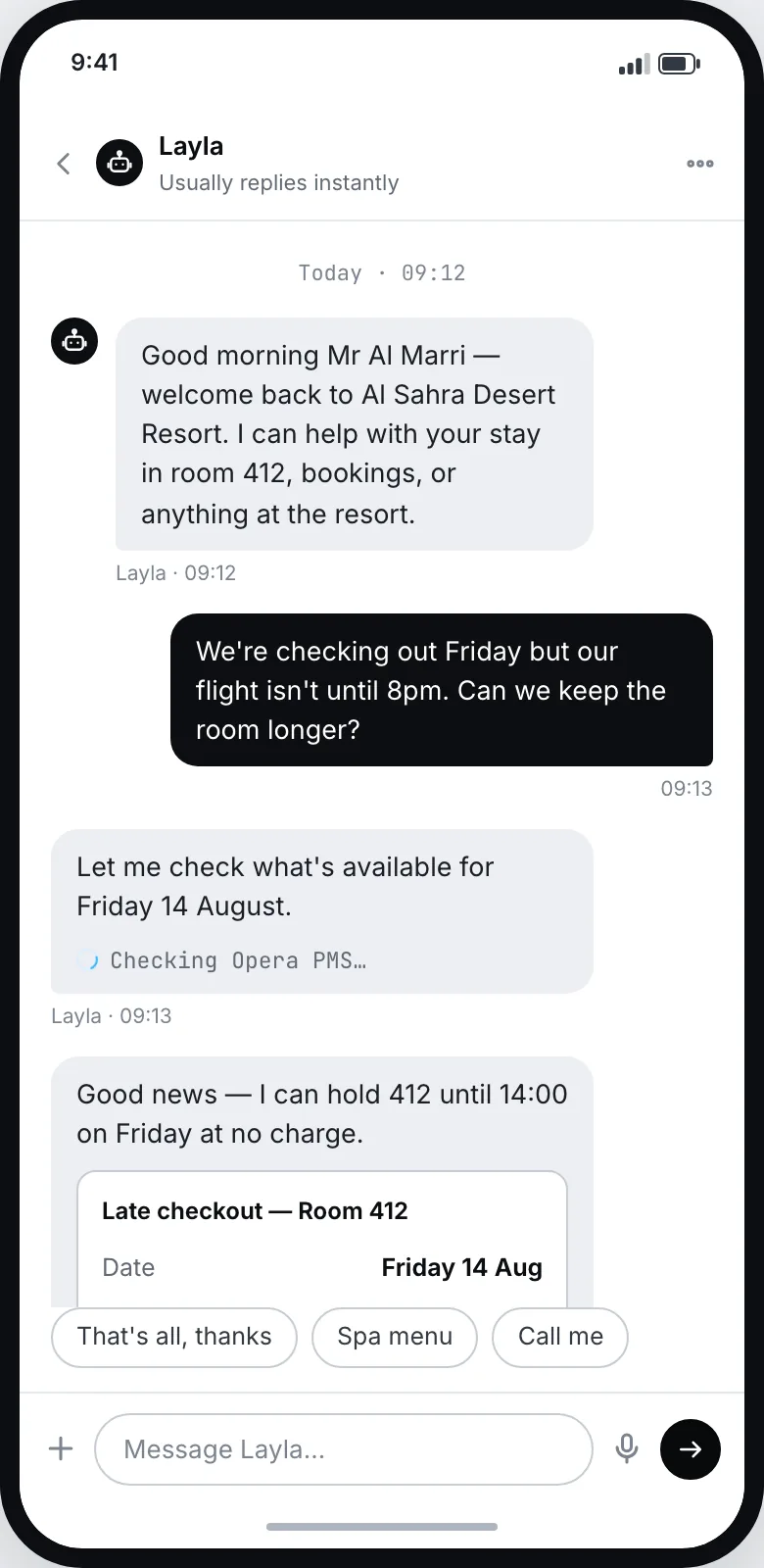
A return is a workflow, not a conversation
The conversation is the easy half. The hard half is the label, the pickup, the stock adjustment, the refund and the four systems that each need to hear about it. In Takallam that is a flow you drag together, with a live preview of the message the customer actually receives.
- When a return is requested, check the order date against your window, and if it is in policy, issue the label and email it.
- Out of policy, do not argue with the customer — route it to a person with the order attached and a recommended answer.
- Exchanging for a different size, check stock in that size first, reserve it, and tell the customer what happens next.
- A live preview of every message, so nobody ships a template that greets a customer as {first_name}.
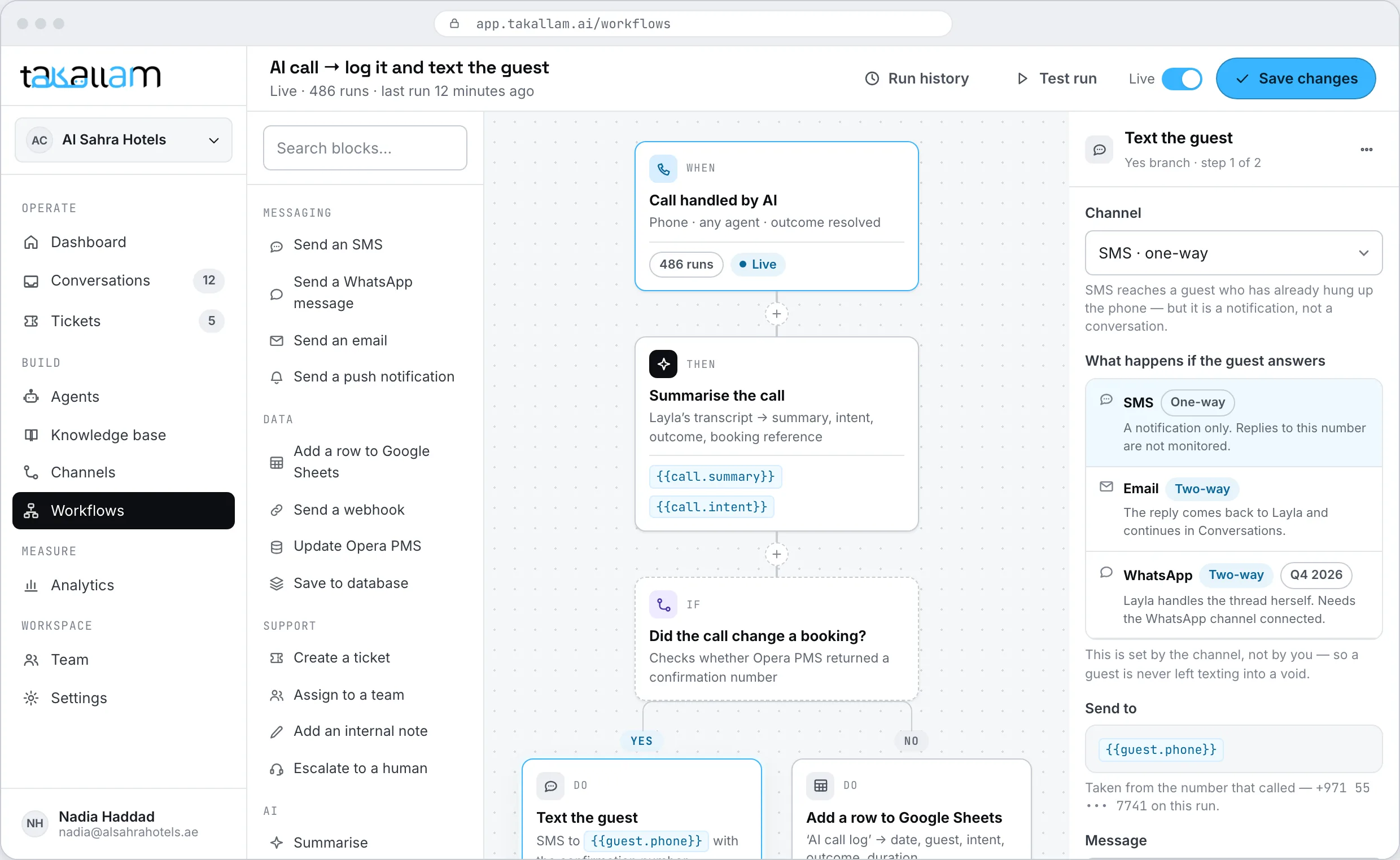
The customer keeps the thread, not a reference number
Some cases have to reach a human: a damaged item, a refund above what you let an agent decide, a customer who has already asked twice. When that happens the case opens on the customer's own phone — the same conversation, updated as it moves, with no login and nothing to quote back to you.
- Your team picks it up with the order, the full transcript and everything the AI already tried.
- SLAs on the cases that matter, so a damaged-on-arrival message does not sit unread for two days.
- Escalation rules you write: a refund above a value, anything mentioning damage, anything from a repeat contact.
- One record of the customer across QR, chat, email and phone, so a caller is not asked to repeat what they typed an hour ago.
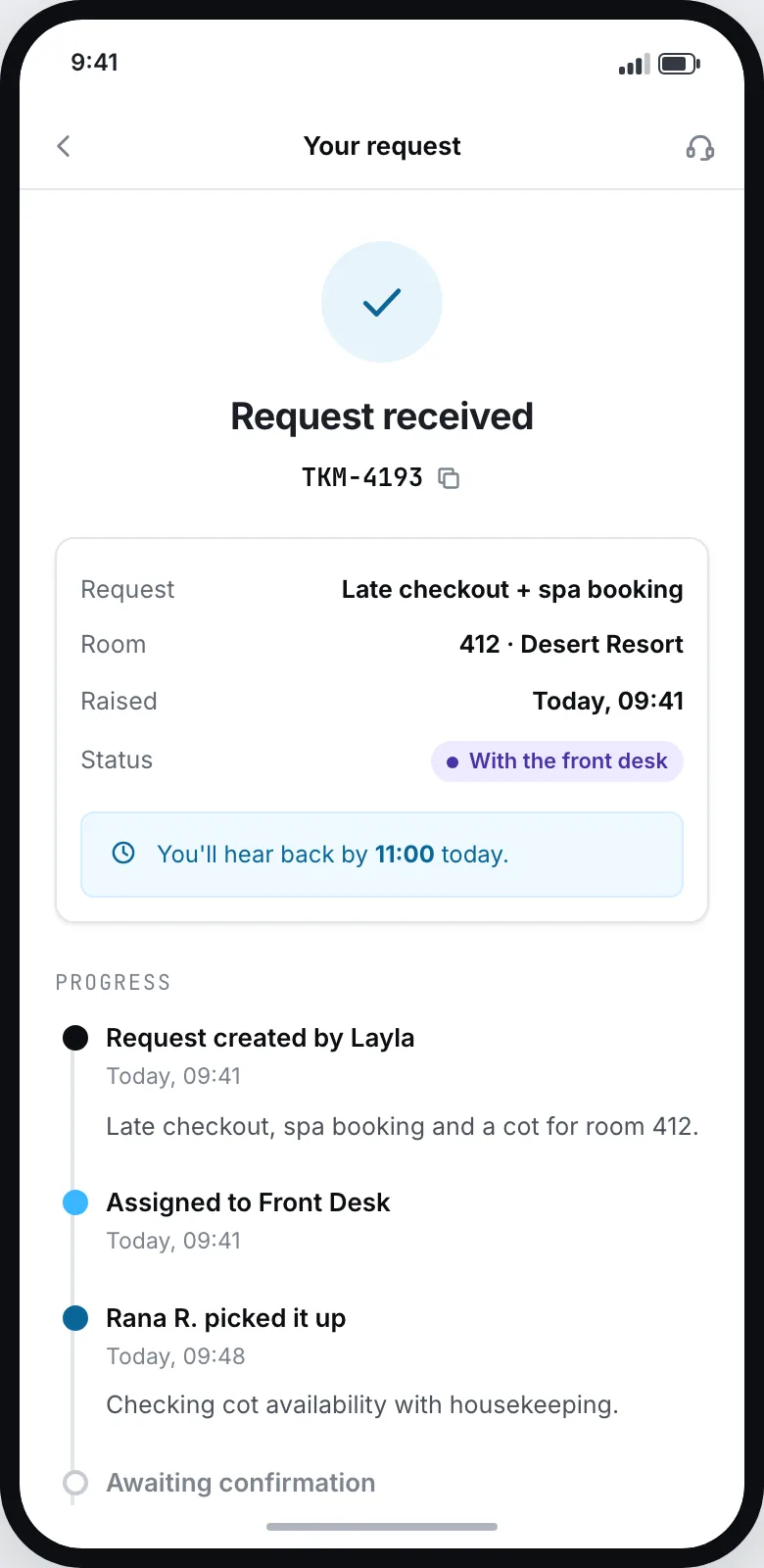
White Friday without a hiring plan
Retail volume in this region is not flat. Dubai Shopping Festival in January, Ramadan and the week before Eid, back to school in August, White Friday in November. The four weeks that make your year are the same four weeks that break your queue — and temporary staff need training in the exact fortnight nobody has time to train anyone.
- Concurrency is not a staffing question. There is no queue and no hold music, whether it is ten conversations at once or ten thousand.
- You pay per interaction, so a quiet March does not cost what a loud November costs. No seats to buy in October and cancel in December.
- Analytics show what people actually asked, when the volume landed, and where the agent handed over — so next season you fix the cause, not the queue.
- The knowledge base is updated once and every channel is correct at the same moment. No briefing note that half the floor missed.
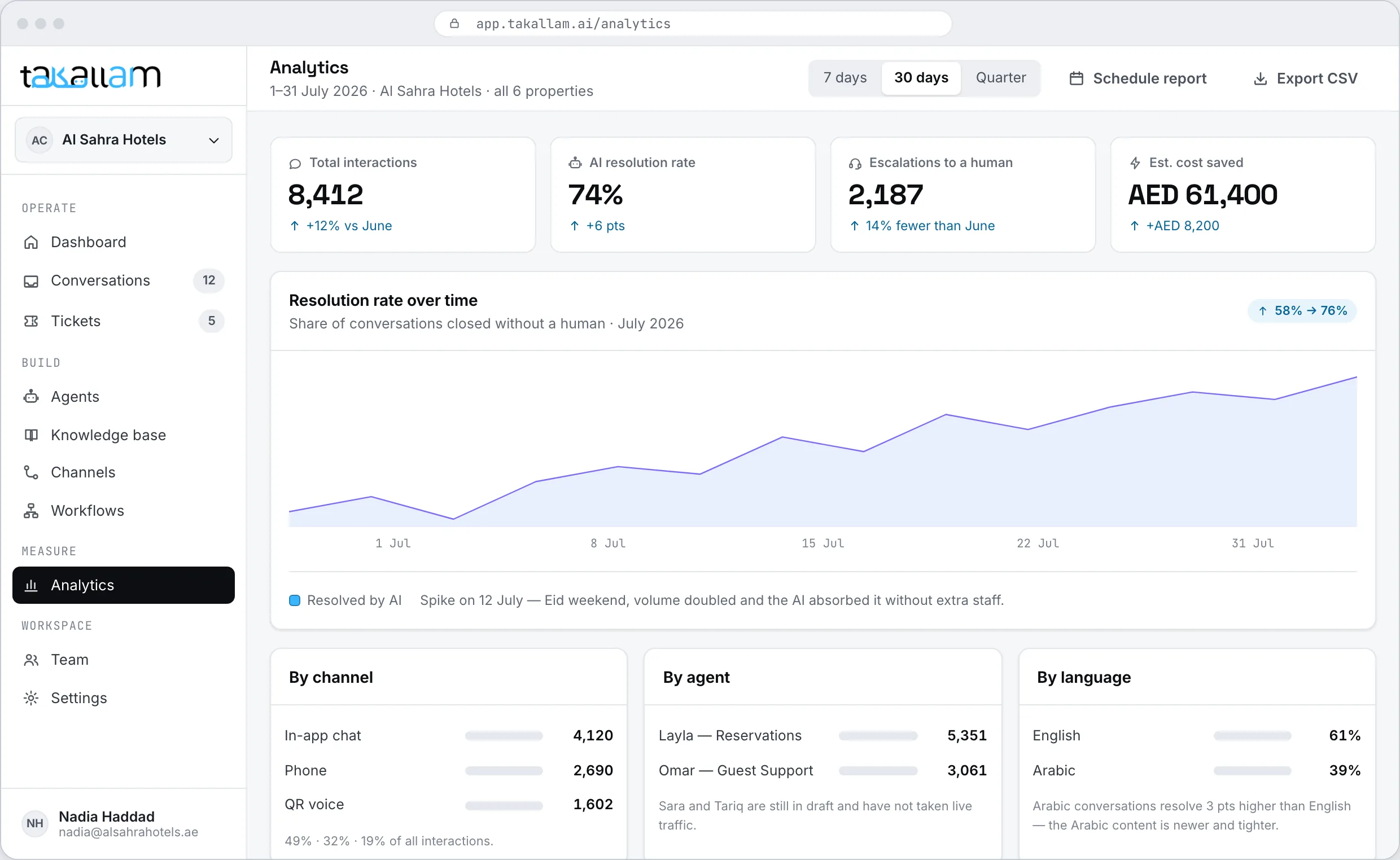
What the platform gives a retailer
These are capabilities of the platform, not results from a deployment. Takallam is pre-launch and has no published performance figures.
Where the code goes
A QR code works where a chat widget cannot reach: in a box, on a shelf, in a fitting room. Print a different code for each placement and you find out which one earns its ink.
The packaging insert
The card in the box is the only piece of your brand a customer is holding at the exact moment something is wrong. A code there turns "this is the wrong size" into a conversation instead of a one-star review.
The shelf edge
Next to the price. What is the difference between these two models, is it in another size, does it come in white. Asked out loud, in the aisle, without finding a member of staff who is stocking a different section.
The fitting room
The one place a customer knows exactly what they want and cannot get it: another size, without getting dressed again to go and look for it.
The receipt and the returns desk
The policy, the window, what to bring and whether an exchange is possible — answered before the customer joins a queue to be told no.
Pop-ups, kiosks and event stands
A code on a stand answers the same questions a staff member would, in two languages, for the length of the event and with no rota to fill.
A different code per placement
Separate codes for the box, the shelf and the fitting room. The analytics show which one gets scanned and what people ask in each place.
Inside the consoleEvery sector we cover
The courier carrying the parcel, the restaurant two doors down, the bank behind the refund — twenty sectors on the same platform, each with the escalation rules it actually needs.
All 20 industriesWhat retail teams ask before they trial anything
Can it actually tell a customer where their order is?
Yes, once it is connected to the system that holds the order. The agent asks for the order number or the phone number on the order, looks it up through a workflow, and gives the real status. Without that connection it can only explain your delivery policy, which is a different and much less useful answer.
Can it process a return, or does it only explain the policy?
Both, and you choose. In the agent builder you decide which actions it may take — start a return, issue a label, book a pickup, reserve stock for an exchange. Leave them off and it answers questions only. Turn them on and every action is logged against the conversation that caused it.
What if we do not have an API?
Then the agent handles everything that is policy and product knowledge — returns windows, sizing, delivery rules, store hours, stock questions you publish — and hands order-specific requests to your team with the customer detail already collected. That is still most of the volume. When you do connect a system later, the same agent starts answering the rest without being rebuilt.
Will it make things up about a product?
It answers from the knowledge base built out of your own site, catalogue and documents, and you see every page it learned from and can remove anything it should not use. When it does not know, the instruction is to say so and hand over rather than guess. You can test it against your own awkward questions before a single customer sees it.
What happens during White Friday or a Ramadan spike?
The agent answers as many conversations at once as arrive — there is no queue to join and no hold music. Because pricing is per interaction rather than per seat, a heavy month costs more than a quiet one and a quiet one does not cost you a headcount you no longer need.
Does it handle Arabic?
Yes — Emirati and wider Gulf dialect in both voice and text, including customers who switch between Arabic and English mid-sentence, which is how most people in this market actually write to a shop. The whole customer-facing experience is right-to-left in Arabic rather than a translated English screen.
Can it take phone calls too?
Yes. Give the agent a new number or point your existing customer service line at it. It answers on the first ring, at any hour, in Arabic or English, and escalates to your team with the transcript attached. Phone is one of four channels, priced separately, and it uses the same knowledge base as QR, chat and email.
What about the email that lands in support@?
It answers that too. Forward your support address to Takallam or connect the mailbox, and the agent reads the whole thread — including an attached order confirmation or a photo of a damaged item — then replies from your own address, in the language the customer wrote in. What it should not answer is tagged, routed and escalated with the thread attached. You can run it in draft mode and approve every reply until you trust it. Email is priced per interaction like the other channels, and a thread that keeps going is not counted again.
How long does setup take?
Takallam reads your site, builds the knowledge base from your product, delivery and returns pages, and drafts your first agents. Your work is reviewing what it learned, deciding what each agent may do, and connecting your order system if you want order-specific answers. The codes for the box and the shelf are the last step, not the first.
Get the order-status queue off your team
We are onboarding a first cohort of UAE retailers now. Tell us your monthly volume, which channels you need and what system holds your orders, and we will come back with a rate against your real numbers.
Pay per interaction · priced per channel · no seats, no minimums