
It started with a question nobody could answer
Ask almost any business in this region what their customers actually ask them, and you will get a shrug. Not because nobody is listening — because the listening is split across four vendors who never compare notes.
Arabic support was something you either staffed or pretended to offer
A customer calls a hotel in Dubai at eleven at night and gets an English menu. They message in Arabic and get an answer written by a translation layer sitting on top of a product designed in another language, for another market. Or they get a person — because the only real way to offer Arabic support was to hire for it, in shifts, around the clock.
- Most support tools treat Arabic as a localisation ticket, not as a language people speak.
- The ones that handle Arabic handle Modern Standard Arabic — which is not how anyone asks for a late checkout.
- Customers here switch between Arabic and English inside a single sentence, and almost nothing copes with that.
The tools were built to be bought separately, so nobody could see the whole customer
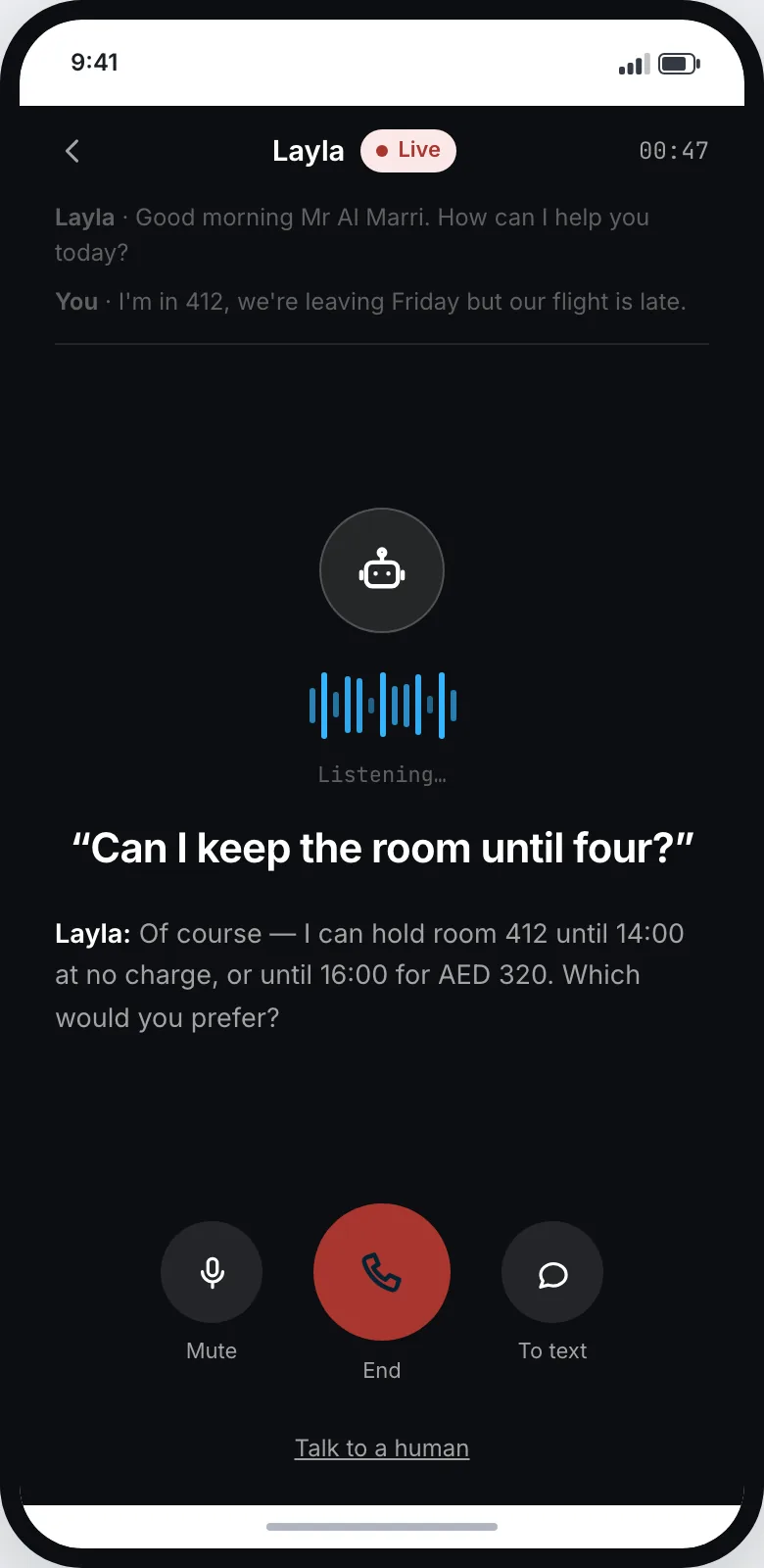
A helpdesk for email. A chat widget that only does chat. A voice vendor bolted onto the phone line. An automation tool to wire them together. Four contracts, four invoices, four half-pictures of the same person — and a customer who has to explain themselves again every time they change channel.
- The guest who called at 9pm is a stranger again when they message at 9am.
- The same question gets three different answers depending on where it landed.
- And the simplest question of all — what do people actually ask us? — has no owner.
Build it the other way round
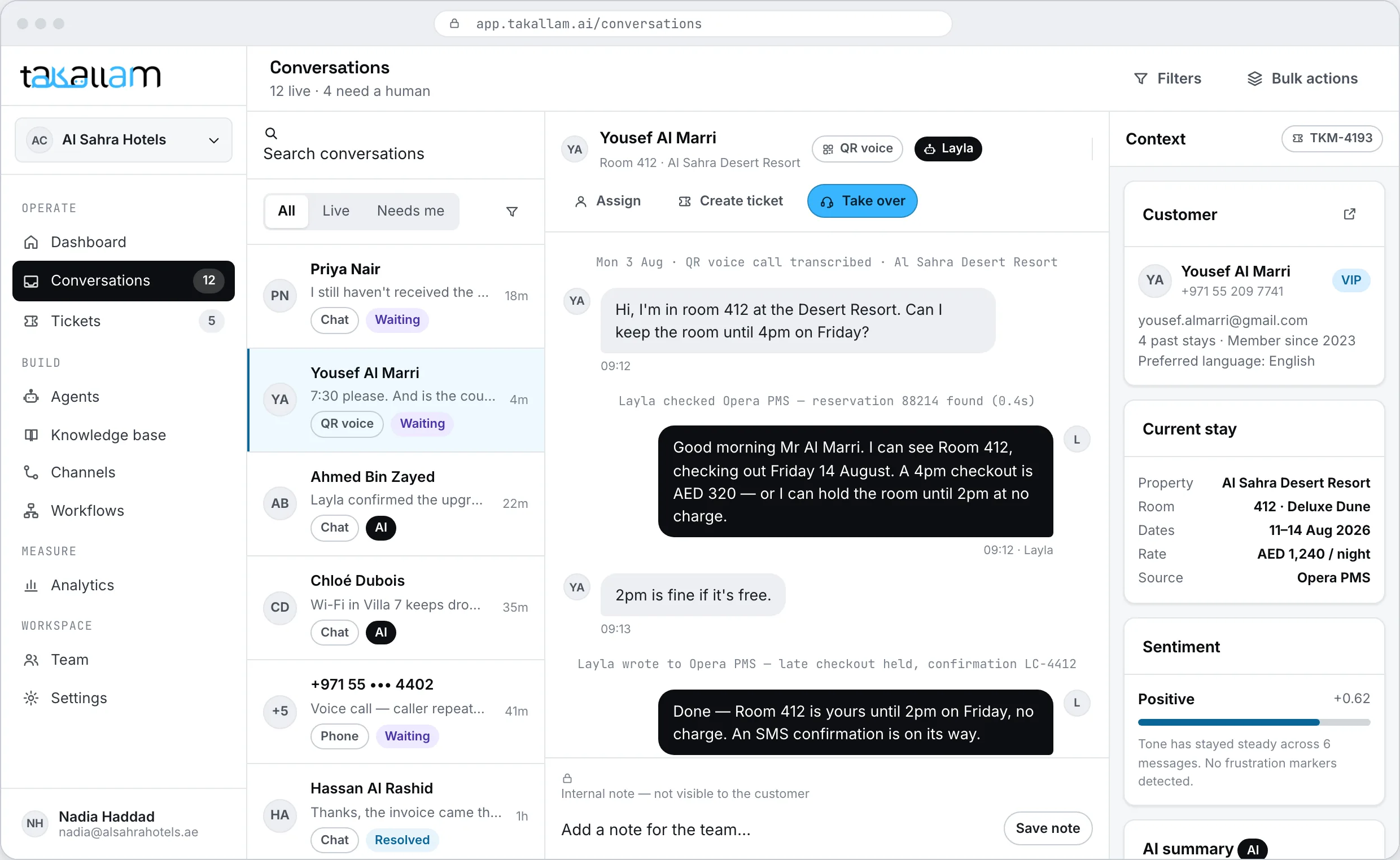
Not a ticketing suite with voice added later. Not an English product with Arabic translated in. Start from how people in this region actually ask for things — they call, or they walk up to someone and speak — and build outward from there.
- Voice-native from the first line of code, not a channel bolted on in year three.
- Arabic and Emirati dialect as a design requirement, not a localisation task.
- One platform, because the split between vendors was the problem, not a feature.
- Data resident in the UAE by default, because that is where the customers and the rules are.
The question usually happens somewhere specific
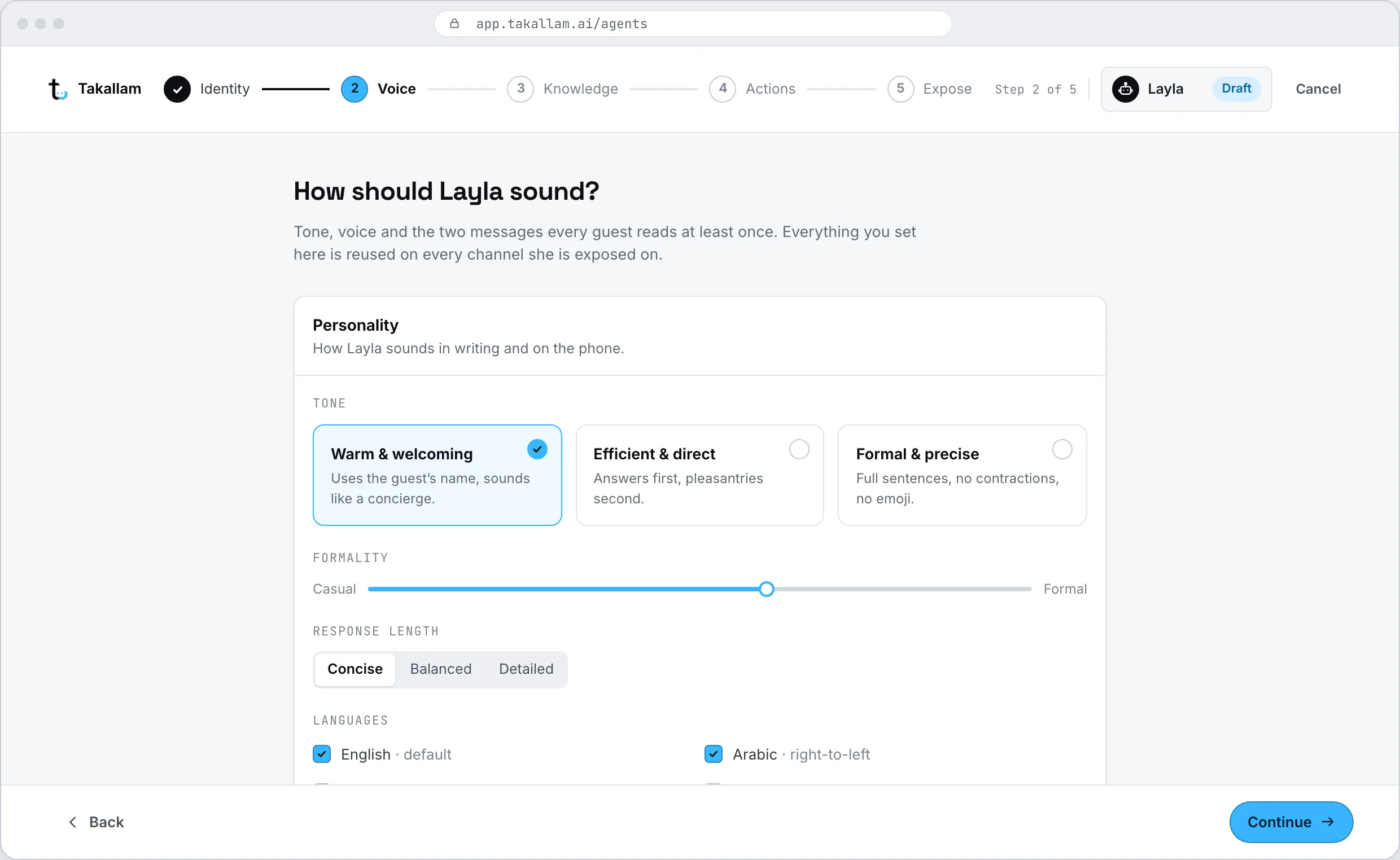
It happens in front of a hotel room door. At a shelf edge. At a service counter, at a clinic reception, on the back of a delivery box. Not at a laptop with a support portal open. So we put a code in that spot and let the customer scan it and simply talk — no app, no number to dial, no queue.
- Nothing to download and nothing to install, because a customer with a question will not install anything.
- Voice first, with a switch to text mid-conversation when the room is loud or the answer is long.
- Different codes in different places, so you can finally see where the questions come from.
The principles that decide the arguments
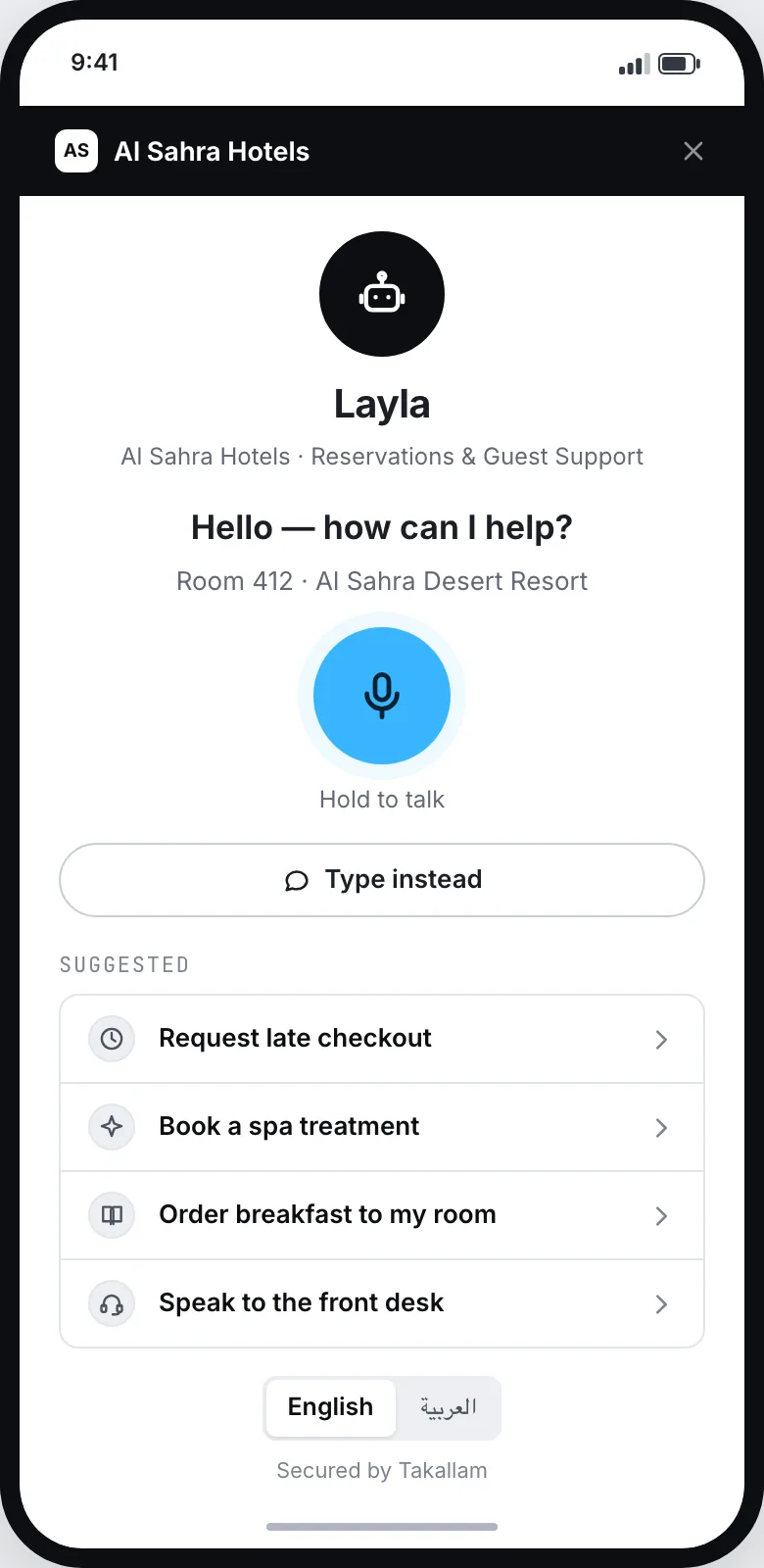
Every product has moments where two reasonable people disagree. These are the rules we use to settle them.
A handover beats a guess
If the AI is not confident, it says so and gets a person. A confident wrong answer costs far more than an honest escalation, and it costs it twice — once with the customer, once with the team who has to undo it.
One customer, one record
Nobody should have to repeat themselves because they changed channel. If the phone call and the email do not share a memory, we have not built the thing we said we would.
Dialect is not a nice-to-have
A product that handles Arabic but not the way people actually speak it is a product that handles Arabic on paper. If it cannot follow a sentence that starts in Arabic and finishes in English, it is not finished.
The data stays here
Conversations, transcripts and knowledge bases stay in the UAE region by default, and the business decides what is kept and for how long. Not a setting buried three menus deep.
You pay for what happens
Per interaction, priced separately for each channel. Not per seat — because charging you more for letting a supervisor look at a screen is a billing model, not a product.
Say what it does, not what it enables
That rule governs this website too. No invented customers, no borrowed logos, no metrics that are really prototype sample data. If we have not earned a claim yet, it is not on the page.
Takallam is an instruction, not a noun
تكلّم is the imperative of "to speak" — closer to "speak" or "go ahead, talk" than to "conversation" or "assistant". It is what you say to someone to invite them to begin. That felt like the right thing to name a product whose entire job is to make talking to a business easy again.
- The wordmark is the same joke: read in Latin it says takallam, and the cyan glyphs inside it read as تكلم.
- One piece of artwork, two languages at once — which is roughly the whole product in a logo.
Early, and saying so
Takallam is pre-launch. We are onboarding a first cohort of businesses in the UAE, and the rates for each channel are being set with them rather than guessed at in advance. There is no customer wall on this site because there is nothing honest to put on it yet.
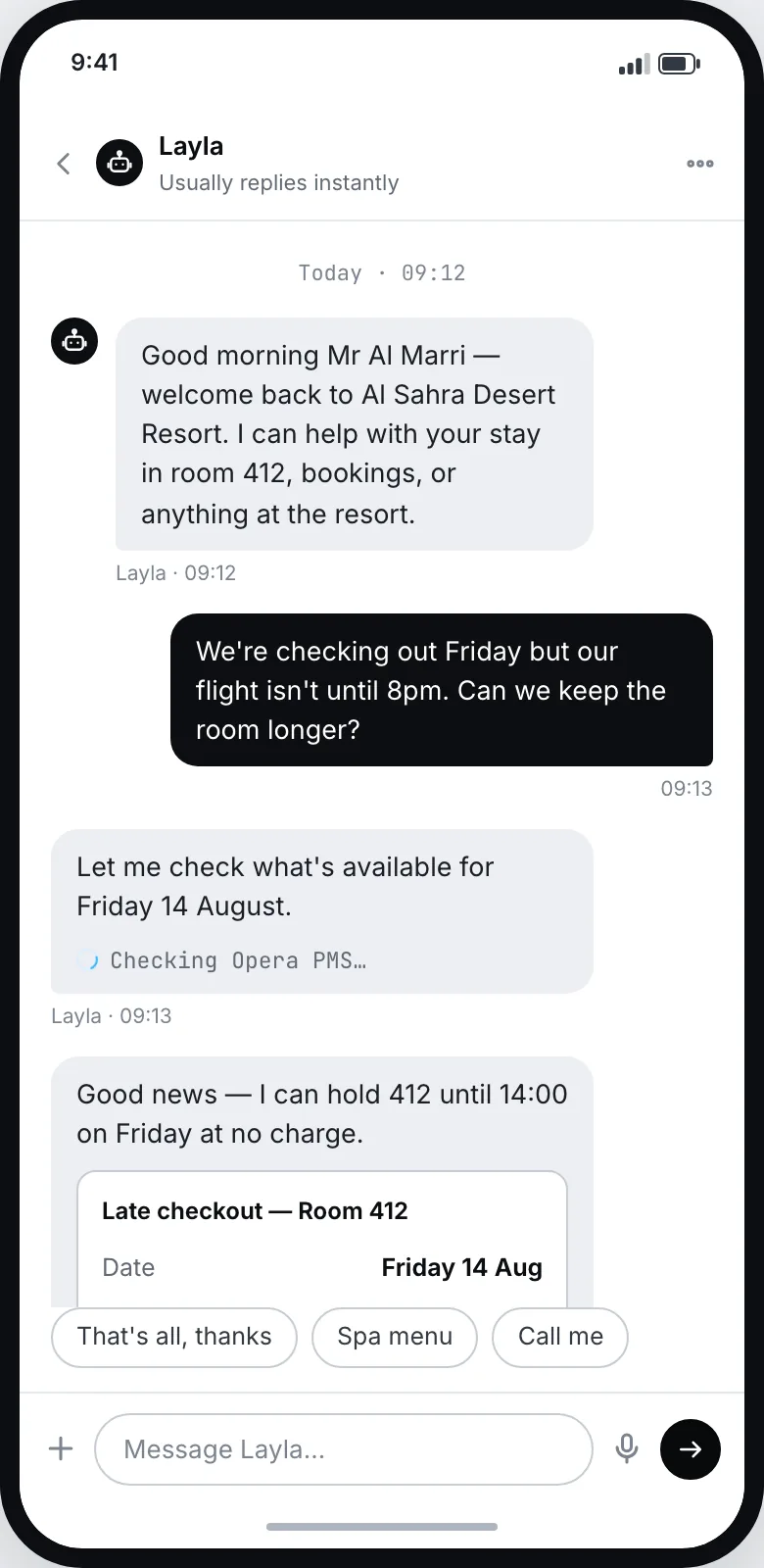
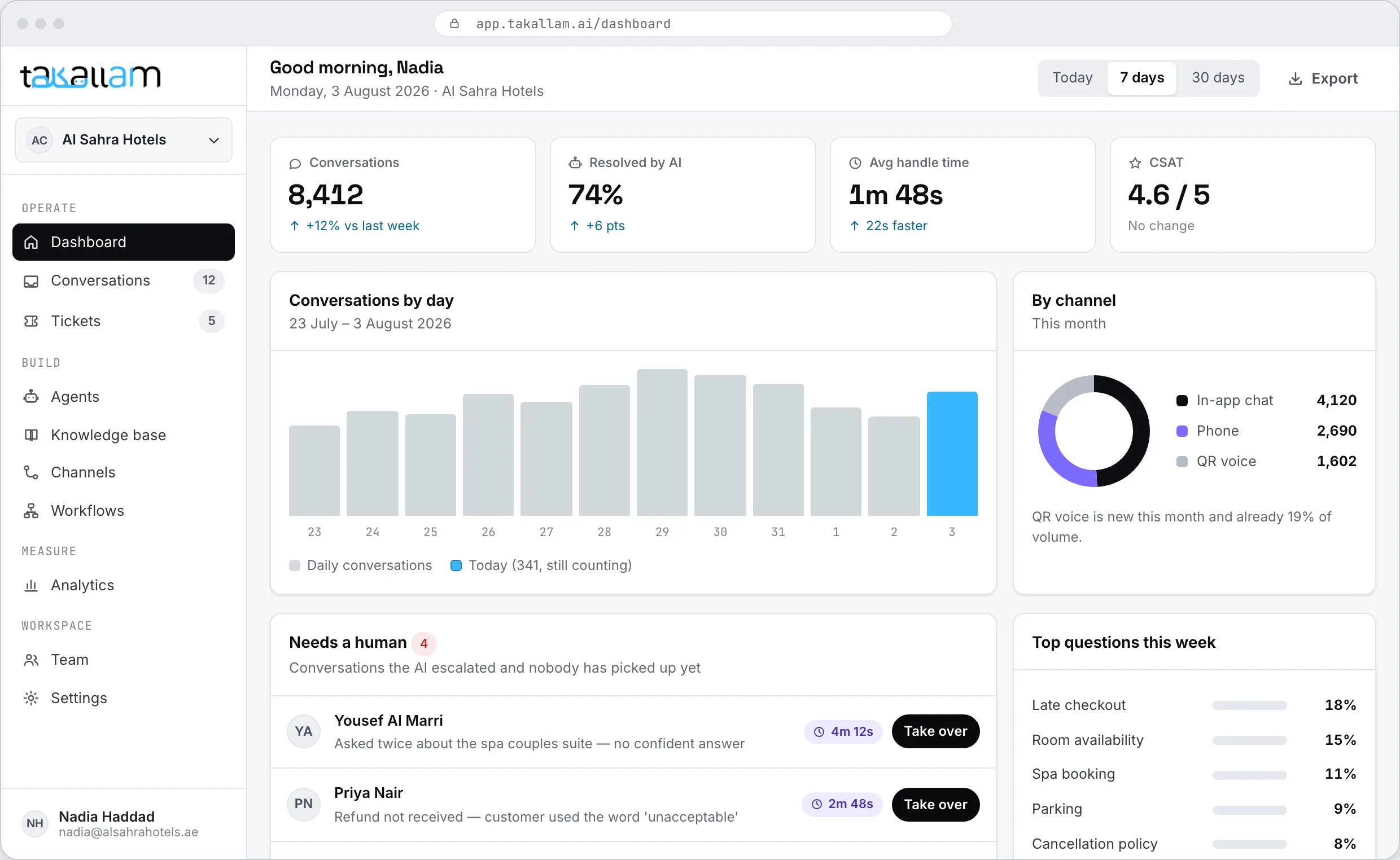
- The product is real and clickable — every screenshot on this site is a genuine screen, captioned as sample data.
- The first cohort shapes the roadmap, which is a real advantage of being early and not a consolation prize.
- When there are customers worth naming, they will appear here with their permission and not before.
About the company
Where is Takallam based?
The United Arab Emirates. That is not a marketing detail — it decides which dialects the product handles first, which systems it connects to, and where the data lives.
Why start with the UAE rather than a larger market?
Because the problem is sharpest here. A market this multilingual, this service-heavy and this concentrated in hospitality, retail and government is the hardest possible test of a support agent. Anything that works here travels well; the reverse is much less true.
Is Takallam live yet?
Not publicly. It is pre-launch and onboarding a first cohort in the UAE. The waitlist is the way in, and it asks which channels you need so the pricing conversation is about your actual volume rather than a generic quote.
Do you have customers we can talk to?
Not yet, and we would rather say that than manufacture a case study. When there are customers willing to be named, they will appear on this site with their permission.
What happens to our data?
It stays in the UAE region by default, you decide what is retained and for how long, and it is not used to train models shared with anyone else. The security page covers the architecture in detail.
How is this different from the AI features our current helpdesk is adding?
A helpdesk adding AI is still organised around tickets, queues and seats. Takallam is organised around conversations and is voice-native — the phone line and the scan-and-speak code are first-class channels rather than integrations. The comparison pages go through it vendor by vendor.
Be one of the first businesses on Takallam
We are onboarding a first cohort in the UAE now. Tell us which channels you need and we will come back with a rate against your real volume.
Made with love in the UAE