
Most of what reception answers is not a medical question
It is a calendar question, an insurance question or a directions question. Takallam answers those on chat, on a QR code in the waiting room and on the phone, in English and Arabic — and hands anything clinical to your team before it says a word about it.
What reception fields all day
The five calls that fill your reception
None of them need a clinician. All of them need someone to pick up, and at 4pm on a Sunday nobody can.
Booking, rescheduling and cancellations
The single largest block of calls in any clinic, and almost none of it is medical. Which doctor, which day, which branch, and the four calls it takes to move one appointment to Thursday.
Insurance and coverage
Is my card accepted here, is this covered, what is my co-pay, do I need approval first. Answered from your actual payer list and your actual policy — and escalated the moment it becomes a claim decision.
Preparation instructions
Fasting hours, what to bring, how early to arrive, whether to come with someone. Read back word for word from the instructions your clinic wrote. Anything that touches a medication goes to a clinician instead.
Results and reports
Whether the report is ready, where to collect it, how it gets sent, who to ask for a copy. Never what the result means — that becomes a ticket for a human, every single time.
Tickets and SLAsHours, branches, parking and departments
Which entrance, which floor, which days the paediatrician is in, where to park, whether the lab is open on a Saturday. The questions that occupy a phone line and never reach a record.
How pricing worksAnything clinical
Symptoms, dosage, side effects, whether to come in now. The agent does not answer these. It says plainly that a person will pick this up, and puts one in the conversation.
The agent can book. It cannot diagnose.
Every Takallam agent has an explicit list of what it is allowed to do, and it is a list you tick, not a prompt you hope holds. Booking, rescheduling, sending directions and reading back a preparation note are actions. Triage, dosage and interpreting a result are not on the menu at all.
- Turn on booking, rescheduling and cancellation. Leave clinical advice off — there is nothing to switch on.
- Write the topics that must escalate immediately: symptoms, medication, results interpretation, anything about a pregnancy or a child.
- Restrict what the agent can read. An agent offering a slot does not need the clinical record to do it.
- Every action is logged against the conversation that caused it, so you can audit why an appointment moved.
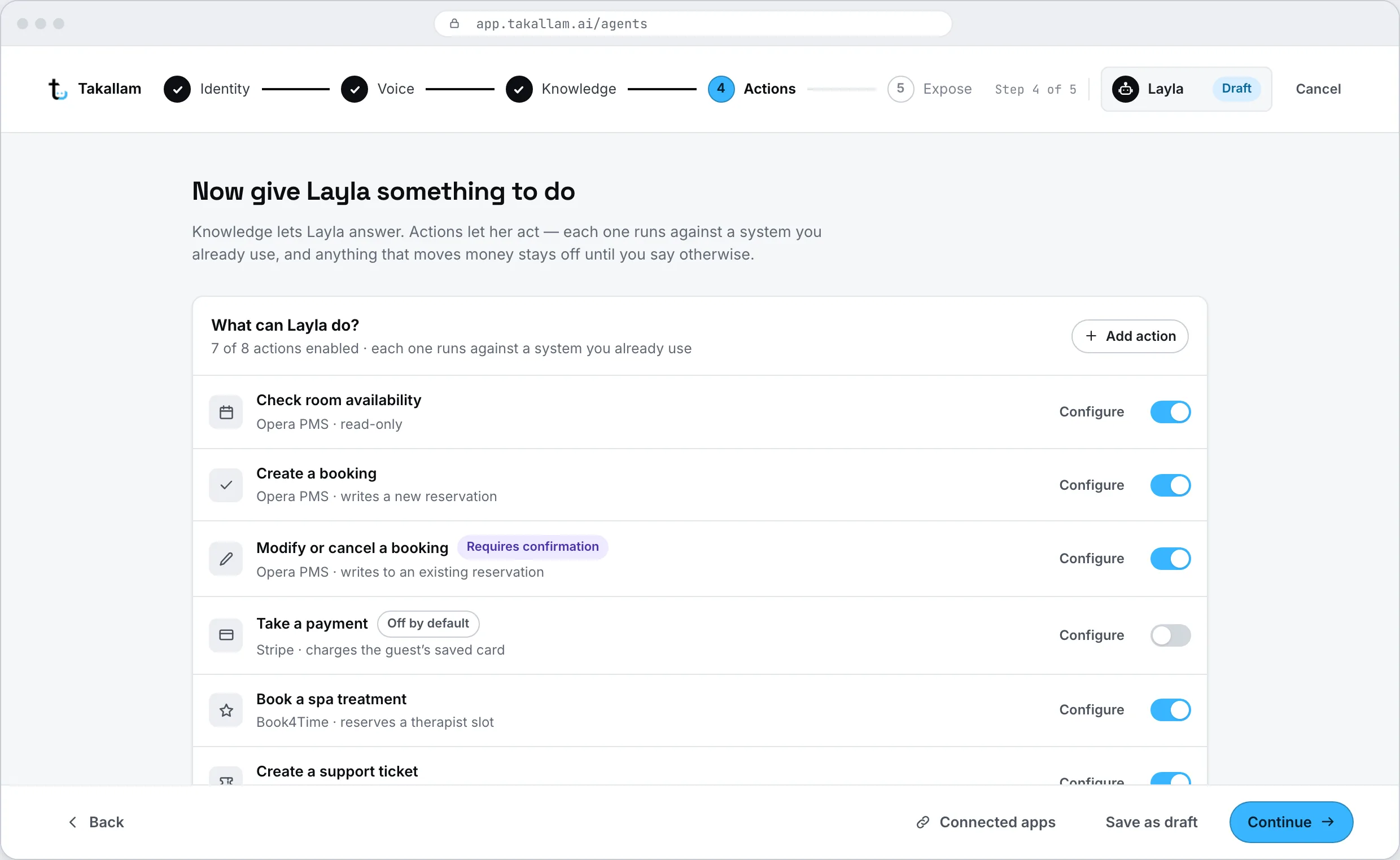
Takallam is not a diagnostic tool, and it does not pretend to be one
It does not triage. It does not interpret a result. It does not tell a patient whether to come in, what to take, or whether something is serious. When a conversation moves onto clinical ground it stops, says so in plain language, and puts a person into the same thread with the full transcript already there.
- Clinical questions escalate by rule, not by the model's own judgement about how confident it feels.
- The patient is told a person is joining. The agent never presents itself as a nurse, a doctor or a clinician.
- It is not an emergency service. Out of hours it says the emergency wording you wrote, including where to go and who to call.
- Takallam holds no healthcare certification today and will not claim one. What it can tell you precisely is where the data sits, who can open it, and how long it is kept.
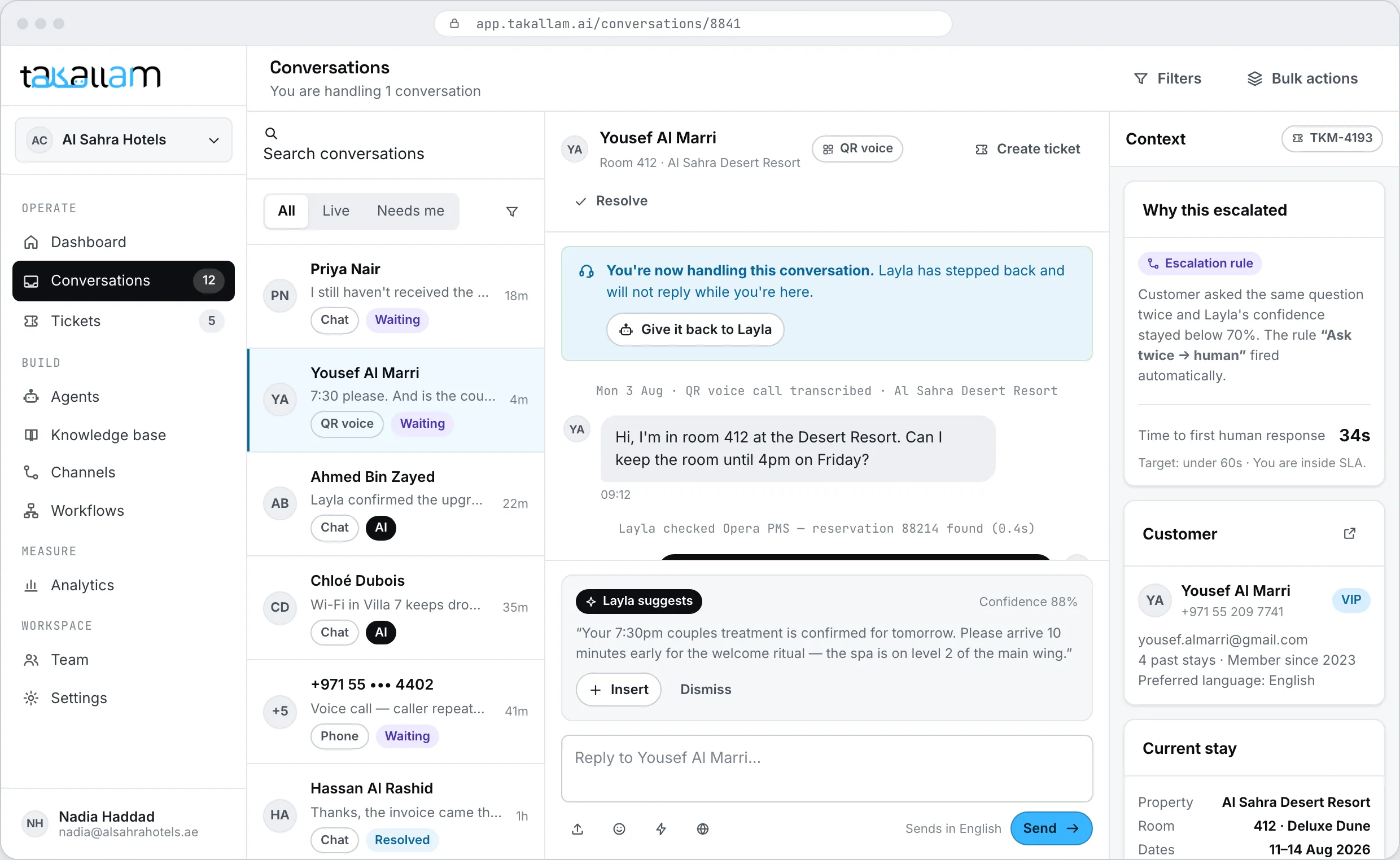
A code in the waiting room, and one on the appointment card
A waiting room is the worst place to make a phone call and the best place to ask a question. People sitting there want to know how much longer, whether they still need to fast, which floor the lab is on, and whether their card covers this. A code on the wall answers that without anyone approaching the desk.
- In a waiting room most people would rather type than speak, so every conversation can switch from voice to text without restarting.
- On the appointment card, the code goes home with the patient and answers the questions that arrive at 10pm the night before.
- Print a separate code per branch or per department so you can see where the questions come from.
- No app, no patient portal, no password reset at the front desk — which is a support call of its own.
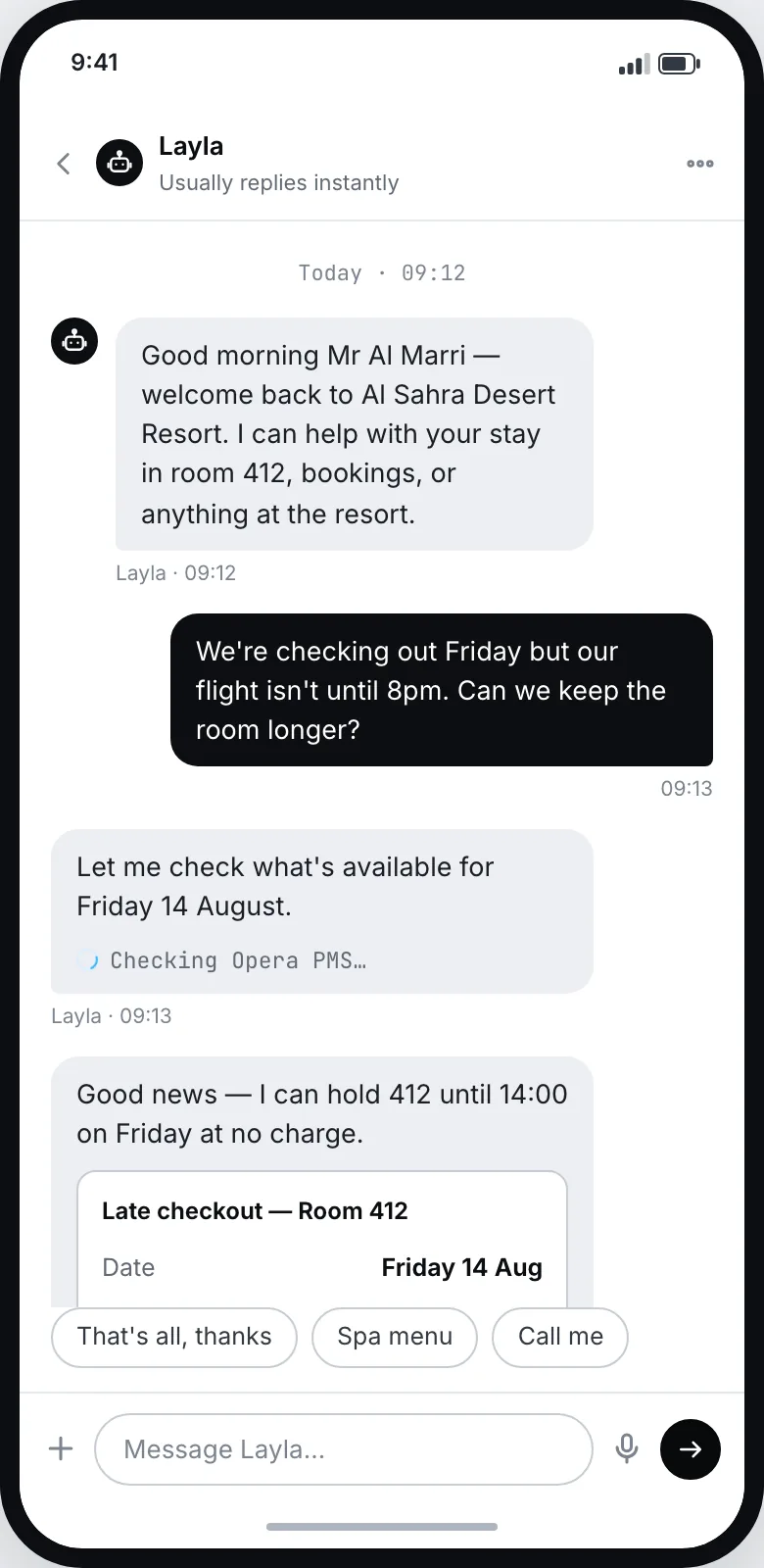
The things that need a person, tracked instead of remembered
A clinic runs on promises made at a desk: someone will call you back, the report will be sent, we will check with the insurer. Those promises live on paper and in memory. In Takallam each one becomes a ticket with an owner, a clock and the conversation attached.
- A results enquiry becomes a ticket with the patient, the department and an SLA running.
- A callback promised by end of day is visibly late before the patient calls back to chase it.
- The person picking it up reads the transcript, so the patient is not asked to explain from the beginning.
- Complaints route to whoever owns them, with everything the AI heard already attached.
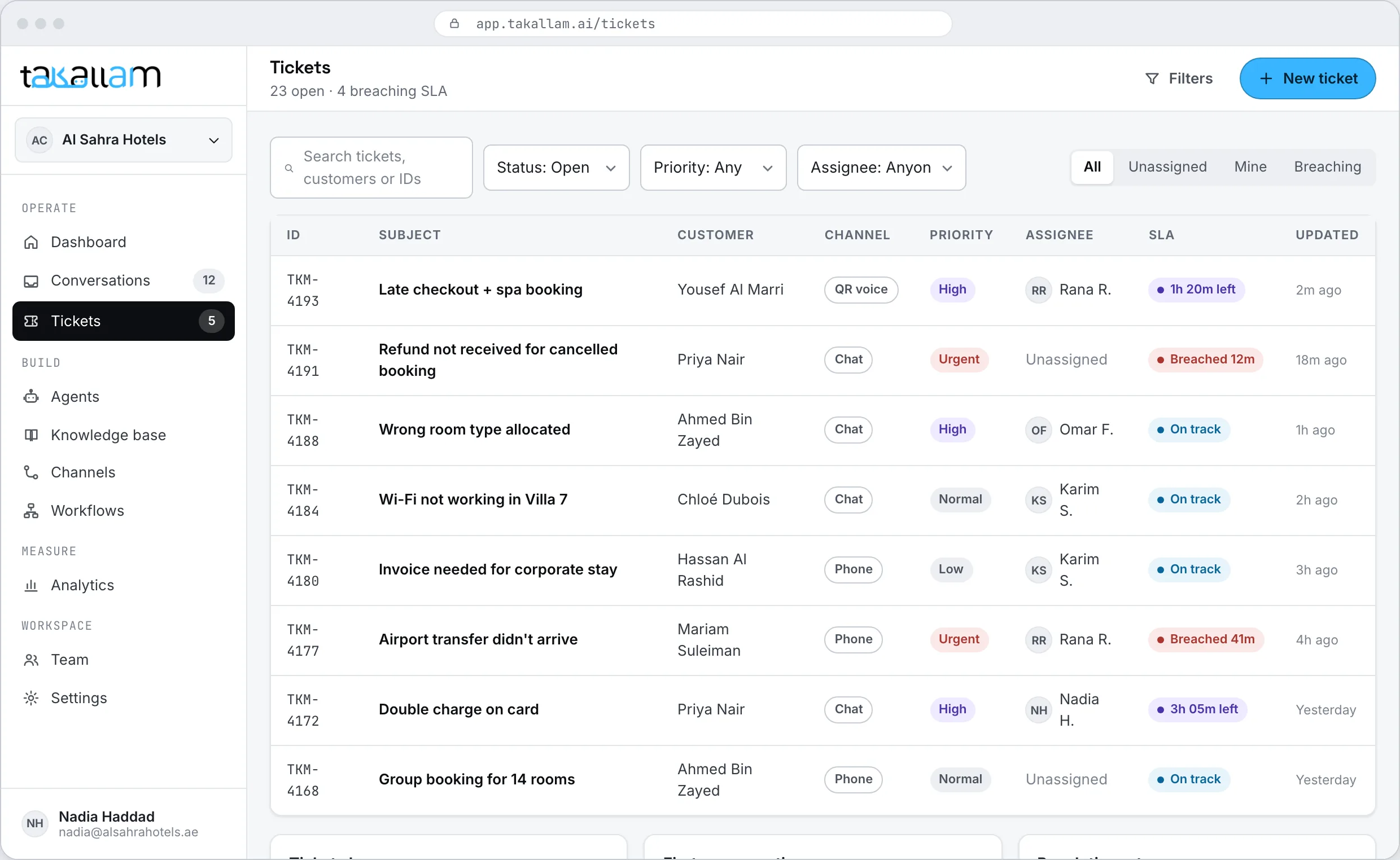
Where patient data sits, and who can open it
Written plainly, because in healthcare this is the first question and the one most vendors answer with a logo wall.
In the UAE region by default
Conversations, transcripts and knowledge bases are stored in the UAE region, me-central-1. UAE health-sector regulation requires patient data to be held inside the country, and in-region by default is where that conversation starts rather than ends.
Retention you decide
You set what is kept and for how long — transcripts, recordings, structured fields. Deleting is a setting in your workspace, not a support request that takes a week.
Access control per person
Roles decide who can open a conversation, who can read a transcript and who can export. Every access is attributable to a named account, not to a shared reception login.
Certification, stated honestly
Takallam does not hold HIPAA, SOC 2 or ISO 27001 certification today and will not tell you otherwise. The architecture is built to support that work. Ask us what exists right now and you will get the real answer.
What clinic managers ask first
Can Takallam give medical advice?
No. It does not diagnose, triage, interpret results or advise on medication, and this is not a matter of tuning a prompt — those actions do not exist for the agent to take. When a patient raises a clinical question, the rule you wrote fires, the agent tells the patient a person is joining, and the conversation moves to your team with the transcript attached.
Is Takallam HIPAA compliant?
No, and anyone who answers that question with a yes on a marketing page deserves a follow-up question. Takallam does not hold HIPAA, SOC 2 or ISO 27001 certification today.
What we can be specific about: data is stored in the UAE region by default, retention is yours to set, access is controlled per named user, and traffic is encrypted in transit and at rest. UAE health-sector regulation requires patient data to stay in the country, and Takallam is built that way from the start. Ask us for the current state and we will show you exactly what exists.
Can patients book and reschedule themselves?
Yes, if you enable it. The agent can offer available slots, take a booking, move one and cancel one, within the rules you set — which doctors, which branches, how far ahead, how close to the appointment a change is still allowed. Everything it does is written back through a workflow into the system that owns your calendar.
What happens after hours, or in an emergency?
You define it. Out of hours the agent answers what it can and says exactly what you wrote for anything urgent — including telling the patient to attend the emergency department or call 998. Takallam is not an emergency service and never behaves like one. Anything escalated after hours follows the path you set, not a voicemail box.
Can it answer insurance questions?
It answers the ones that are facts: which insurers you accept at which branch, what a patient should bring, whether a procedure normally needs prior approval, what your policy says about co-pay. It does not make a coverage decision or promise a patient that a claim will be paid — that goes to your insurance desk with the conversation attached.
Does it speak Arabic properly?
Yes — Emirati and wider Gulf dialect in both voice and text, including patients who switch between Arabic and English mid-sentence. In a clinic that matters more than usual, because a patient explaining why they need an earlier appointment should not have to do it in their second language.
What does it cost?
You pay per interaction, and each channel is priced separately, because a phone call and a chat message do not cost the same to deliver. No per-seat licences and no minimum commitment. Takallam is pre-launch, so rates are being set with the first cohort — join the waitlist and we will quote against your actual call and message volume.
How long does it take to set up?
Most of it is automatic. Takallam reads your website and builds the knowledge base from your departments, doctors, hours and policies, then drafts your first agents. The real work on your side is reviewing what it learned, writing the escalation rules, and deciding exactly which actions each agent is allowed to take.
Take the calendar calls off your reception desk
We are onboarding a first cohort of UAE clinics now. Tell us how many branches you run, which channels you need and what your booking system is, and we will come back with a rate against your real volume.
Pay per interaction · priced per channel · no seats, no minimums